Fall & Winter
Snow mold on Minnesota lawns last spring: what to change this fall
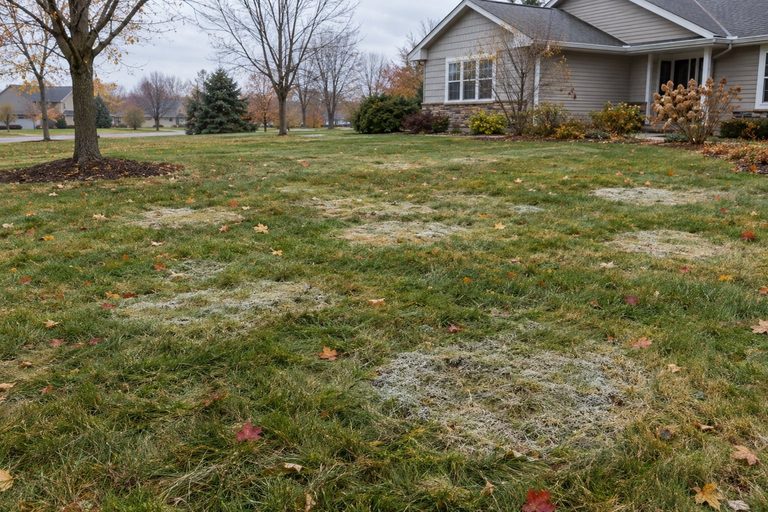
Snow mold hit many Minnesota lawns last spring. Learn the fall changes that reduce it: final mowing height, leaf handling, and fertilizer timing.
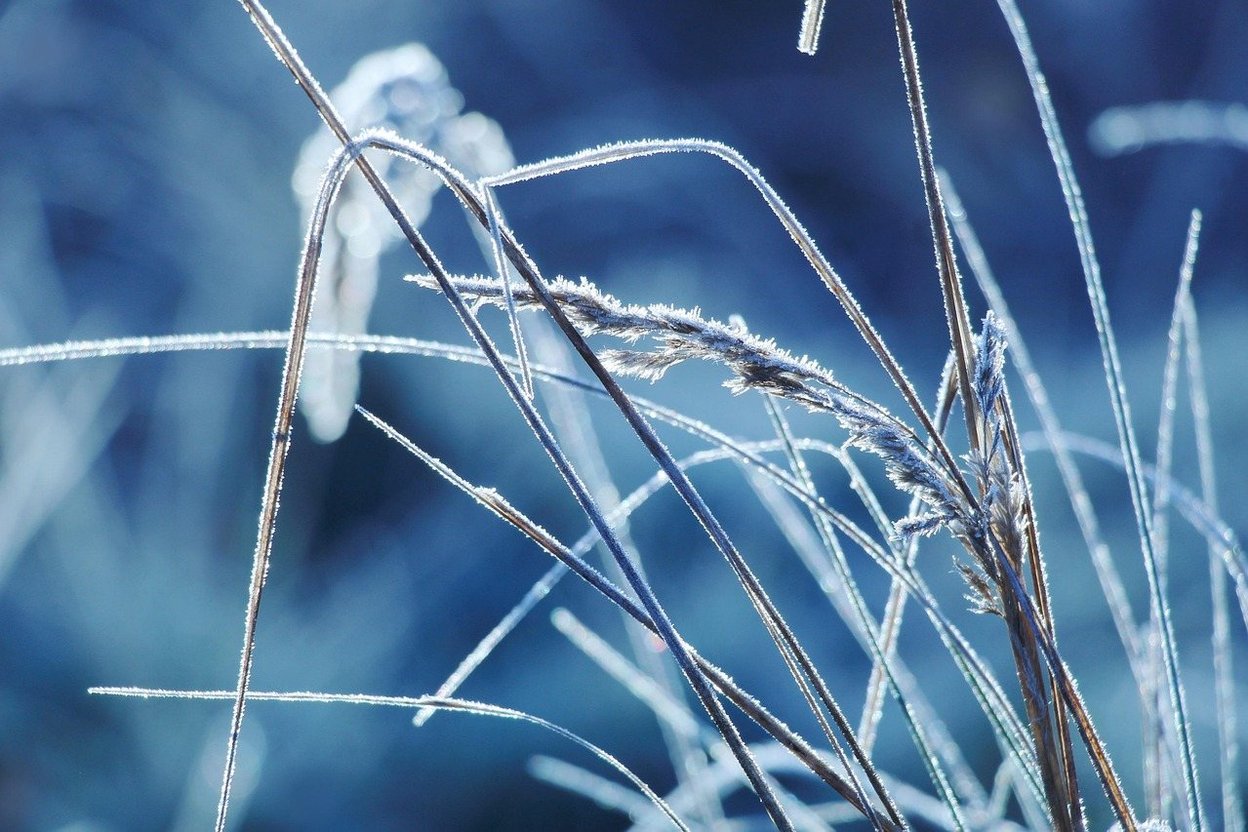
Frost doesn't end mowing season. Learn when to mow after a frost and how to protect your lawn until growth stops for the season.
Jack · golf course superintendent·9 min read·October 8, 2026
It's a Saturday morning in October. You planned to mow, and when you look out the window the whole yard is white. Is the season over? Should the mower go back in the garage? No. A light frost doesn't end mowing season. Stay off the grass while it's frosted, mow later in the day if it has grown, and put the mower away only when the grass actually stops growing. Here's how to tell when each of those applies.
The rule is simple: don't put any weight on frosted grass. That means your feet as well as the mower. Purdue's turf people say cool-season lawns handle a frosty morning fine as long as nothing walks or drives on them before the frost melts.
On a golf course this is called a frost delay. Nobody goes out until the frost is completely gone, not the mowers and not the first tee time. Use the same all-clear at home:
Once both are true, and the melt water has dried off the leaves, go ahead and mow if the grass needs it. Usually that means late morning or afternoon.
Frost is frozen dew. The National Weather Service defines it as a thin layer of ice crystals that forms when the surface itself drops below 32°F. According to the USGA, the ice isn't only on the outside of the blade. It can form inside the leaf too, and that makes the plant brittle. When a wheel or a boot presses down, those crystals puncture the cells.
The tricky part is that nothing looks wrong at the time. You mow at 8 a.m., the lawn looks fine, and a day or two later your footprints and tire lines show up in the grass. Purdue describes the pattern: the leaves blacken first and then turn brown.
On a home lawn the damage is usually to the leaf, and leaves grow back. The worse case is injury to the crown, the growing point at the soil line. The USGA says crown damage can take months to recover from. Short grass is more exposed, which is why putting greens are the most fragile turf on a course. A lawn kept near 3 inches has more leaf above the crown to absorb the abuse. It isn't immune, though.
You might also be wondering why there was frost when the forecast said 35°F. The official air temperature is measured at 2 meters, about 6.5 feet off the ground. On a clear, calm, humid night the grass loses heat fast and can drop below freezing while that thermometer still reads 32 to 36°F. That's why the Weather Service issues frost advisories when the forecast low is in the mid-30s.
A light frost is only a cold morning. It doesn't flip a switch in the grass. Kentucky bluegrass, tall fescue, perennial ryegrass and the fine fescues keep growing as long as the afternoons warm back up.
University of Minnesota Extension puts the best shoot growth for cool-season grass at air temperatures of 55 to 75°F. Roots keep working whenever the soil is above 32°F, and they do best in soil between 50 and 65°F. Fall soil holds summer heat for a long time, so a frosty dawn followed by a 60-degree afternoon is still a good growing day.
Iowa State Extension gives a practical line for when leaf growth stops: daytime highs that stay consistently below 50°F. In Iowa that usually happens in late October or early November. Treat it as a rule of thumb, not a lab number. Your own fall weather and elevation will move it.
A hard freeze is a different event from a light frost. That's a deeper drop of the air itself into the upper 20s or colder. Even then, the Weather Service doesn't agree on one number from office to office. The forecast will tell you what kind of night is coming, but the lawn is the better judge. If it puts on real height after a cut, it needs another one.
A fall cut follows the same rules as a summer cut. You just wait longer in the day to make it.
If you've been mowing tall and want to go into winter a little shorter, step down over several mowings. Iowa State suggests dropping from 3 to 3.5 inches down to 2.5 to 3 inches starting in mid- to late September. Sam Bauer at Minnesota says to bring anything over 3 inches down to 3 over several cuts, not in one final pass.
Don't scalp the lawn to "winterize" it. Bauer warns that cutting very short to head off snow mold or voles can stress the grass more than those problems would. Minnesota Extension's lowest limit for a winter height is 2 inches. The opposite mistake is leaving the lawn so long that it flops over and mats. Somewhere in the middle, cut a third at a time, is where you want it.
Before you start, take one more lap around the yard. The shady strip along the fence and the low corner by the downspout are the last spots to thaw, and they're easy to forget when the front yard has been green for an hour.
Maybe the mowing crew showed up at 7 a.m., or you walked out to get the paper. Now there are dark lines across the lawn that have since turned straw-brown. Those are bruised leaves. Purdue's published example looks exactly like that.
What happens next depends on the calendar. Purdue says frost-traffic damage early in the fall can grow out in several weeks, while damage later in the season takes longer. Tracks made in November may stay visible until spring green-up, because the grass isn't growing enough to replace the leaves. The USGA's guidance for golfers says recovery can take more than a month.
Don't try to fix them with fertilizer. Purdue notes that once the lawn is dormant or the soil is frozen, the grass can't use it. A late feeding also adds the soft, lush growth that snow mold likes. Just leave the tracks alone. The one thing you can do is avoid driving the same lines the next frosty morning.
In spring, watch for a patch that stays thin after the rest of the lawn has greened up and filled in. That's the less common crown injury. Treat it like any other thin spot and overseed it.
The mower goes away when the grass stops growing, not on the morning of the first frost. Across the northern US that's often somewhere from October into November. Minnesota's lawn calendar runs mowing into early November, and central Iowa often mows into early to mid-November. Many years you'll mow between Halloween and Thanksgiving.
The Farmers' Almanac gives a simple check: mow, then wait. If 10 to 14 days pass and the grass has barely grown, you're done. If it has added another inch or two, cut it again.
Those last cuts are worth making. Minnesota Extension says grass left too long going into winter mats down, holds moisture and invites winter disease, and long grass can also attract voles. Penn State and Purdue both list "mow until growth stops" as part of keeping snow mold down, along with going easy on late-fall nitrogen. The last mows also take care of the leaves. Shred a thin, dry layer so the pieces fall between the blades. Bauer says you should still see at least 80 to 90 percent grass afterward. If you can't, bag or rake the extra on the final mow.
Once the grass has quit, run the fuel out, change the oil and sharpen the blade. Purdue recommends that winter service, and it means the mower is ready in spring.
The same morning rule applies in April when a surprise frost turns the lawn white. Wait for the thaw, let it dry, and keep mowing. Spring is when this grass wants to grow most.
Photo by gosiak1980 on Pixabay.
Snow mold hit many Minnesota lawns last spring. Learn the fall changes that reduce it: final mowing height, leaf handling, and fertilizer timing.
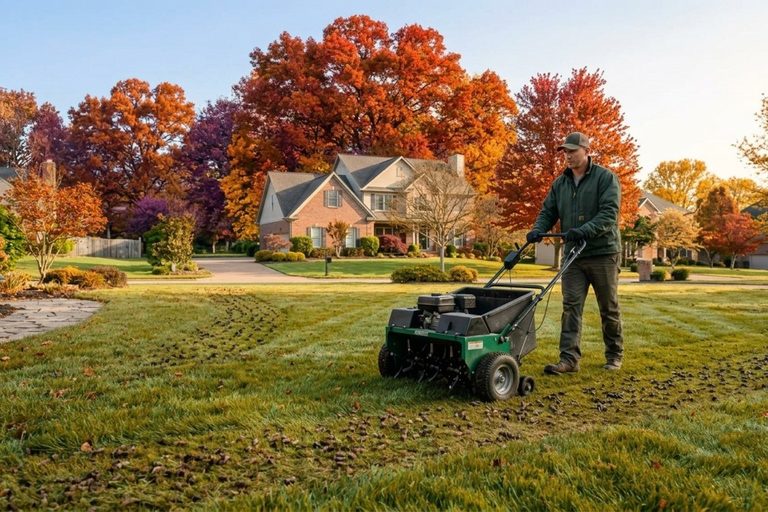
Late October core aeration can work if the grass is still growing and the soil is moist and unfrozen. Here's how to check, and when to wait.
Move carved pumpkins off the turf within days to compost, a drop-off, or a garden bed so the grass doesn't die underneath. Local rules vary.