Golf Course Know-How
The Golf Course Trick That Cut Out Our Trimming: Tree Rings, Fence Lines, Pavement
Learn how golf courses kill grass at trees, fences and pavement to end string trimming. Covers mulch rings, edge strips and safe spraying.
What a superintendent does to get greens through a northern winter: raising mowing heights, fall feeding, topdressing, snow mold prevention, covers. Plus the parts that work at home.
Jack · golf course superintendent·3 min read·October 2, 2026
Putting greens are the most pampered grass in the world, mowed at around an eighth of an inch all summer. Getting that kind of turf through a northern winter is a full fall project for a superintendent's crew. I ran that project for years. Here's what we did, and which parts translate to a home lawn.
In late fall, we raised the height of cut on greens and mowed less often. More leaf means more food production and better protection for the crown of the plant over winter.
At home: keep mowing at 2½ to 3 inches until growth stops. Don't scalp the last cut. See when to stop mowing.
Greens got a late-season nitrogen application timed so the plant stored it rather than growing leaves, which helps winter hardiness and spring green-up.
At home: the late-fall fertilizer feeding around your last mowing.
We cored greens in fall to relieve compaction and topdressed with sand to smooth the surface, fill the holes and protect the crowns. A heavy late topdressing also helped protect the turf from winter injury.
At home: fall aeration is the single best thing for compacted lawns. Topdressing with compost on thin spots helps too.
Snow mold diseases (gray and pink) were the big threat on northern greens under long snow cover. Superintendents commonly apply preventive fungicides in late fall.
At home: fungicides are rarely needed on home lawns. Your best defense: don't let the lawn go into winter long and matted, don't over-fertilize late, and keep leaves off. Our snow mold guide covers recovery.
Ice sheets are deadly to some turf, especially annual bluegrass, which can suffocate under long-lasting ice. Low spots where water ponds and freezes were the first places to die. We fixed drainage in the off-season and sometimes removed ice and snow from greens late in winter.
At home: fix wet spots and low areas and keep downspouts from dumping onto the lawn.
Many northern courses cover greens over winter to protect against desiccation, wind and ice. Covers range from permeable fabric to insulated covers with air gaps.
At home: covers aren't practical for lawns, but you can protect young evergreens from wind and keep traffic off frozen grass. Water trees before the ground freezes too.
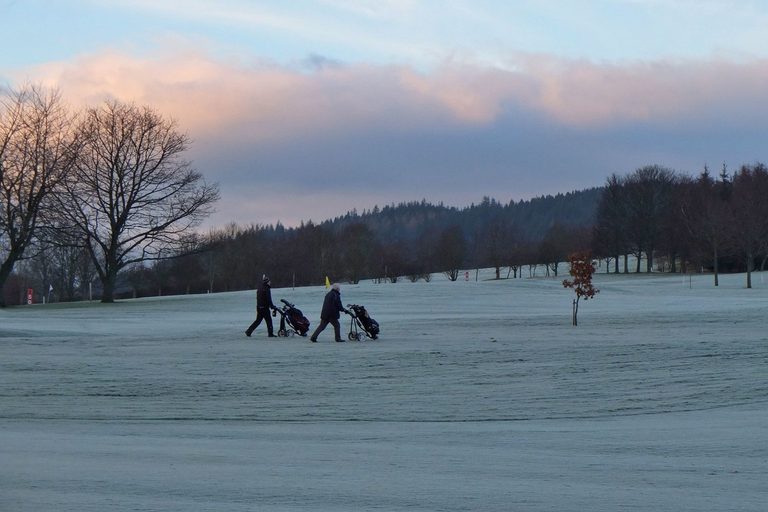
Walking on frosted or frozen greens breaks the frozen leaf blades and leaves footprints that turn brown. That's why courses hold frost delays.
At home: stay off the lawn when it's frosted, and don't park on it or pile snow from the driveway in one spot all winter.
Winter damage is mostly decided in the fall. Every one of those jobs was about sending the plant into winter healthy, well fed, at the right height, and dry at the crown. Do the same for your lawn and you'll be mowing a thick green lawn while your neighbors are still raking dead patches in April.
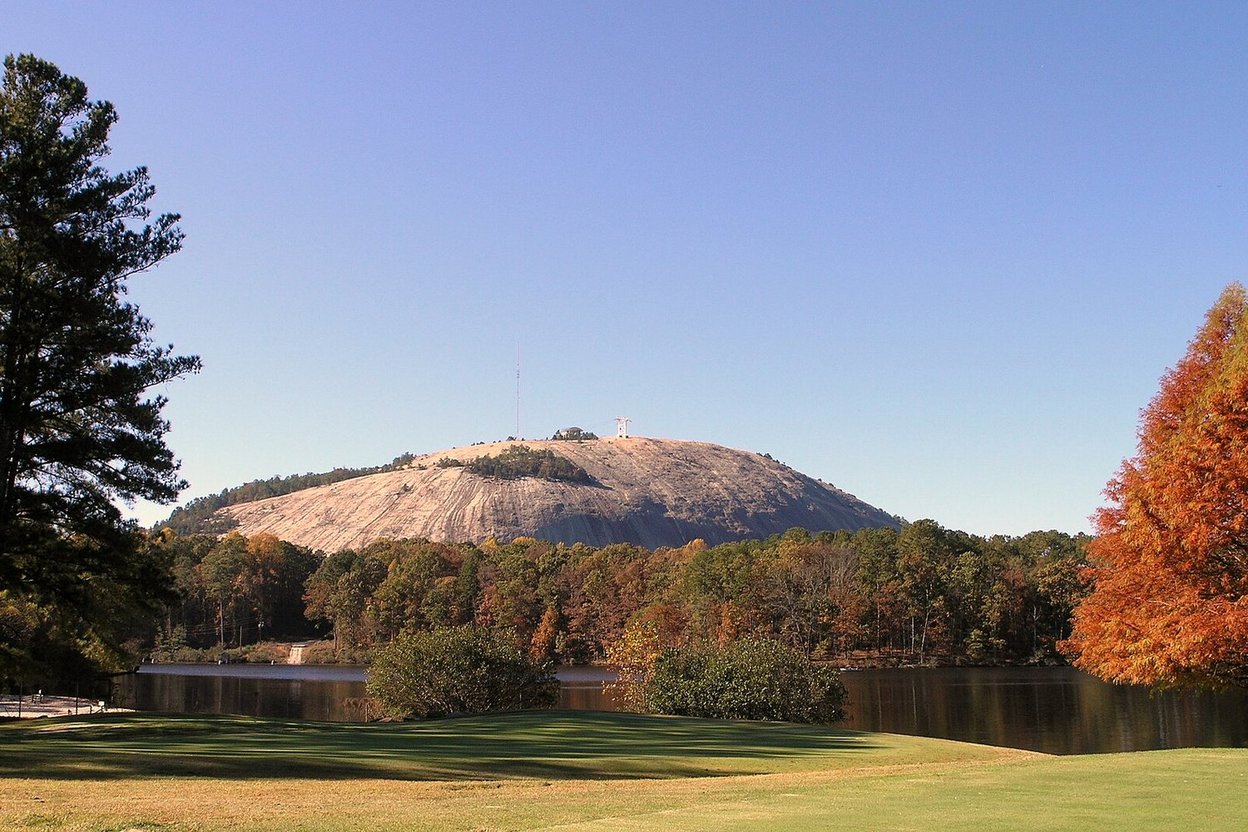
Photo: Autumn in Stone Mountain Park by Darryl Pierce, CC BY-SA 4.0.
Learn how golf courses kill grass at trees, fences and pavement to end string trimming. Covers mulch rings, edge strips and safe spraying.
Walking on frosted grass breaks the frozen leaf blades, and the damage shows up days later as brown footprints. Why courses hold tee times on frosty mornings and what that means for…
These are the techniques that separate good home lawns from great ones. Used correctly, they deliver noticeable improvements in density, smoothness, and playability (or walkability) without the heavy chemical programs of the…