Fall & Winter
Can you still core-aerate the lawn in the second half of October?
Late October core aeration can work if the grass is still growing and the soil is moist and unfrozen. Here's how to check, and when to wait.
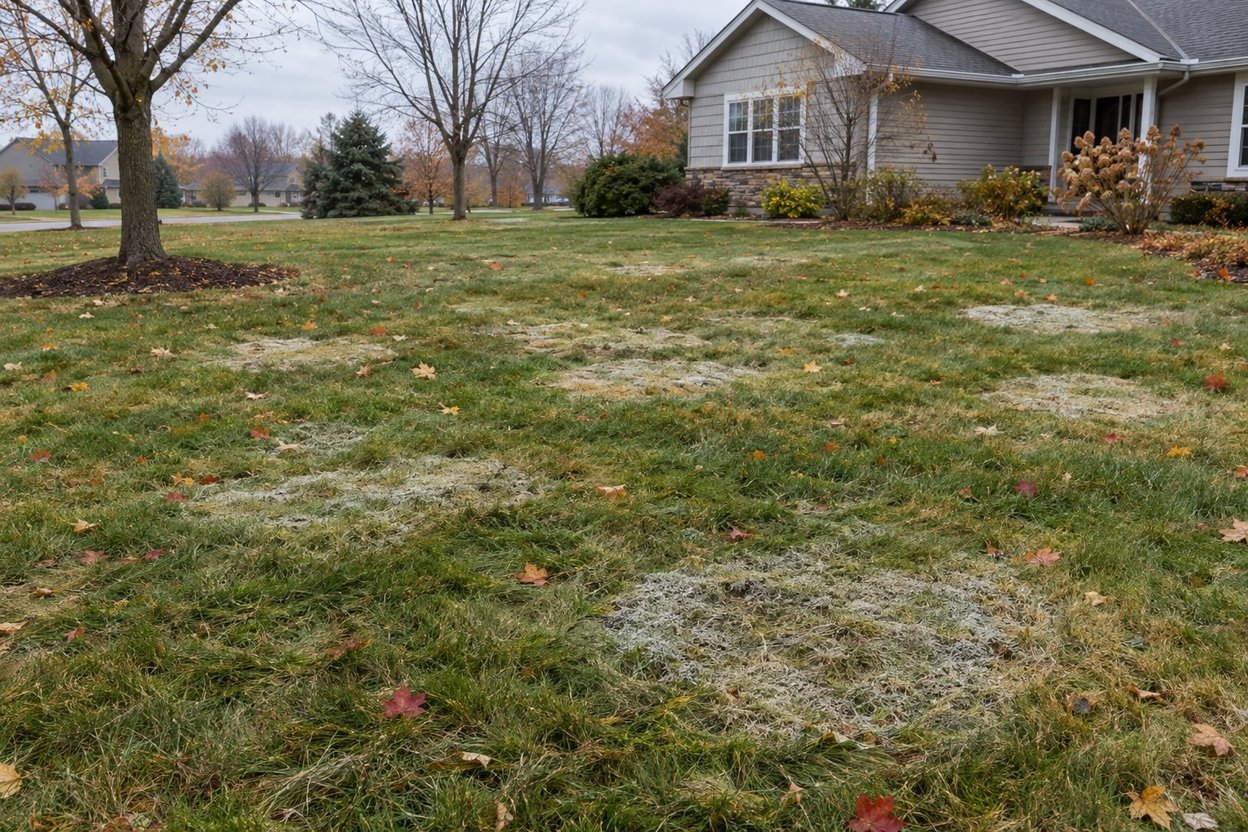
Snow mold hit many Minnesota lawns last spring. Learn the fall changes that reduce it: final mowing height, leaf handling, and fertilizer timing.
Jack · golf course superintendent·8 min read·October 18, 2026
You probably remember the day last spring when the snow finally pulled back and the lawn underneath was covered in matted, crusty circles in gray and dirty pink, as if something had chewed through the grass all winter. That was snow mold. Most lawns that had it came back on their own. No new state rule or official Extension guidance has come out since then. What you can change is what you do in the next few weeks: how short you make the last cut, what you do with the leaves, how much fertilizer you put down, and how patient you are next spring.
There has been no statewide announcement and no new Extension rulebook. The University of Minnesota's advice on snow mold is the same advice it gave before last winter. The people changing are homeowners who looked at those patches in April and decided not to repeat it.
Snow mold is a fungal disease of cool-season grass. According to University of Minnesota Extension, pink and gray snow mold develop only when it's wet and close to freezing, and they show up most often in early spring as the snow melts. Long snow cover helps them. A UMN Extension turf specialist explained in 2018 that extended snow cover insulates the soil and can lead to more snow mold. He also said snow cover is generally good for a lawn and asked people to be patient in spring. In 2023 MPR reported the same thing after a heavy winter: the snow and moisture made snow mold worse, but it isn't likely to do permanent damage.
That's the frame for everything below. Snow mold usually hurts how the lawn looks more than it kills it. Most of what prevents it is free, and it happens before the snow flies.
You'll see two kinds, and both come out of cold, wet ground near the freezing mark.
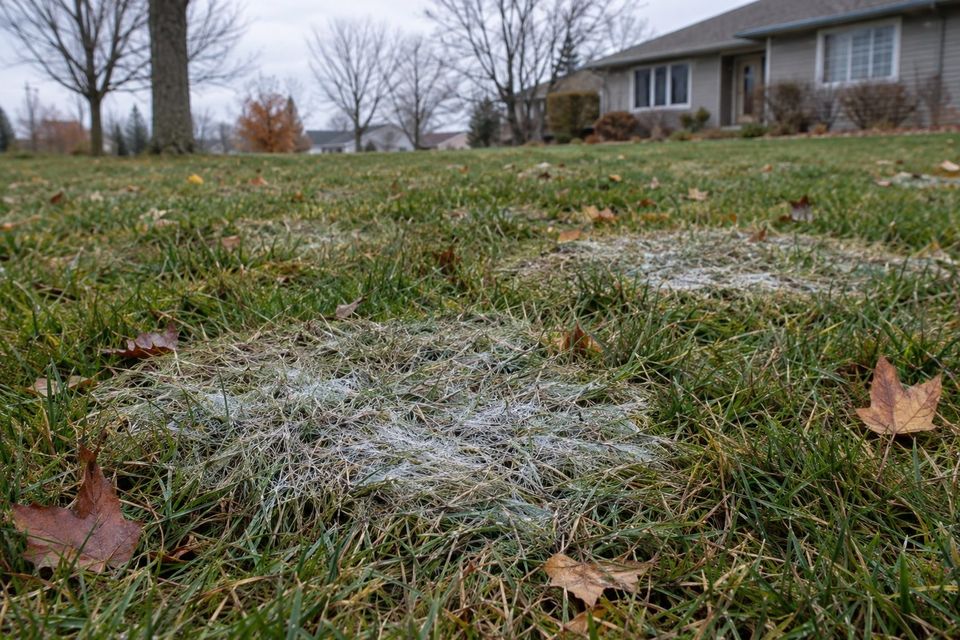
Pink snow mold (Microdochium nivale) makes round patches of tan to gray matted grass, usually 2 to 8 inches across, per UMN Extension. In sunlight the patches can look pale pink, sometimes with a grayish edge.
Gray snow mold (Typhula) also makes round gray patches, but they range from about an inch to 3 feet wide. When they're dry they can look silvery and brittle. When they're wet you may see cobweb-like growth over the grass. The giveaway is on the blades: small hard structures, tan to dark brown, about the size of BBs. Extension calls them "bee-bees." Gray snow mold patches can run together into large dead-looking areas, which is why one yard can look worse than the neighbor's.
On a course, what we cared about was where the patches showed up, more than which kind they were. Snow mold comes back to the same places: the north side of the house, the low corner where snow drifts and melts slowly, the strip where the plow pile sits until April. Before the snow comes, write down where yours were last spring. Those are the spots the rest of this plan is aimed at.
On a golf course, we'd never try to fix snow mold by working harder in April. We set the turf up in October and November so the disease has less to work with. Your lawn works the same way, and the steps take less time than raking up the damage afterward.
1. Make the last mow a little shorter. The University of Minnesota's turf program says to lower your mowing height by 0.5 to 1.0 inch on the final mow, ending at about 2.0 to 3.0 inches. Long grass flops over under snow and makes a damp, matted mat, which is exactly what snow mold needs. Don't scalp it, though. Going from 3.5 inches straight to 1.5 inches stresses the plant just before winter. Drop the deck one notch for the final cut and stop there. When that cut happens depends on your weather. The usual cue is when the grass has mostly stopped growing, and in a lot of snow-belt yards that lands somewhere between Halloween and Thanksgiving. That's my estimate, not a date to circle.
2. Deal with the leaves. UMN says mulching or removing heavy leaf litter helps reduce snow mold pressure. I prefer mulching. Running the mower over a light layer of leaves chops them into the turf, and the same UMN newsletter says mulched leaves return nutrients to the soil, help moderate soil temperature and cut down on weed germination. That's the course approach: one pass that does three jobs. If the leaves are so deep that the mower just pushes them around, bag that batch or rake it onto the beds. Don't let a wet mat of whole leaves sit on the grass all winter.
3. Go easy on fall nitrogen. Extension material reprinted by Rice County, Minnesota, advises against heavy fall nitrogen. If snow mold shows up on your lawn year after year, it says to skip the fall fertilizer application entirely. In plain terms: a lawn full of soft, lush top growth going under the snow gives the fungus more to feed on. If you fertilize in fall, keep it moderate. If your lawn is one of the repeat offenders, this is the year to skip it and see what happens.
4. Know what you can't control. The UMN newsletter states plainly that snow cover and temperature also affect snow mold, so these steps lower the risk without guaranteeing anything. The same Extension material notes that snow mold tends to follow an early, deep snow that falls before the ground has frozen. You can't stop that kind of storm. What you can control is how much long grass, leaf mat and soft growth is sitting under it when it arrives.
The Extension guidance is short: chemical control isn't needed unless snow mold shows up in the same area every year. I agree with that.
Here's how I'd look at it from a superintendent's chair. For most home lawns, snow mold is a cosmetic problem that grows out by late spring, and a preventive fungicide over the whole yard costs money and time to fix something the lawn would fix by itself. It's worth considering for a spot that gets hit every spring after you've already done the cultural work: the final cut, the leaves, the lighter fertilizer. Even then, treat that spot only, not the whole property. Fungicide on a lawn is something you might do in a few problem spots, not every fall. If you decide to go that way, call your local Extension office or a licensed applicator for current product and timing advice for your area, and follow the label exactly.
If you see patches again next spring, the best first step is to do nothing.
Wait for the lawn to dry. UMN Extension horticulture educator Julie Weisenhorn told MPR in 2023: "You want to stay off of that lawn until it does have a chance to dry out." She also said: "We don't want people raking when it's wet." Wet, cold turf tears easily, and walking on it pushes the fungus into healthy grass.
Then rake gently. Once the surface is dry, a light rake through the matted patches lifts the blades and lets air in. UMass Amherst's turf program says light raking of matted areas helps the canopy dry faster, and that recovery usually happens naturally once soils warm and growth starts. Use a leaf rake and a light hand, not a dethatcher.
Let it regrow before you do anything bigger. In 2018, UMN Extension advised waiting about three weeks before spring raking or cleanup, then about another month before mowing, dethatching or aerating. That's a lot of waiting, but it's what lets the crowns push out new leaves without being torn up.
Reseed only what stays thin. By late spring you'll know which patches came back and which didn't. Most will green up, maybe a little slower than the rest of the lawn. Where you still see bare soil, rough it up, seed with the same cool-season mix as the rest of the lawn, and keep it moist until it's established. Then put those spots on your list for next fall, because places that get snow mold tend to get it again, and that's where the final low cut and the clean leaf cleanup matter most.
Late October core aeration can work if the grass is still growing and the soil is moist and unfrozen. Here's how to check, and when to wait.
Move carved pumpkins off the turf within days to compost, a drop-off, or a garden bed so the grass doesn't die underneath. Local rules vary.
Frost doesn't end mowing season. Learn when to mow after a frost and how to protect your lawn until growth stops for the season.