Fall & Winter
Snow mold on Minnesota lawns last spring: what to change this fall
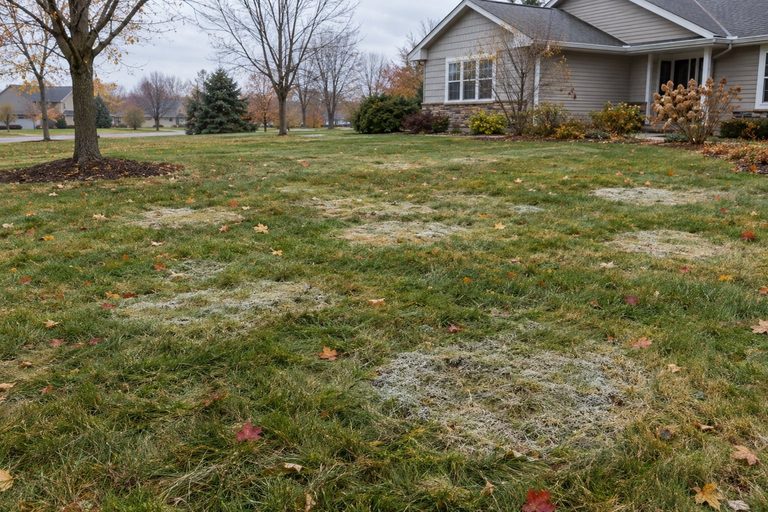
Snow mold hit many Minnesota lawns last spring. Learn the fall changes that reduce it: final mowing height, leaf handling, and fertilizer timing.
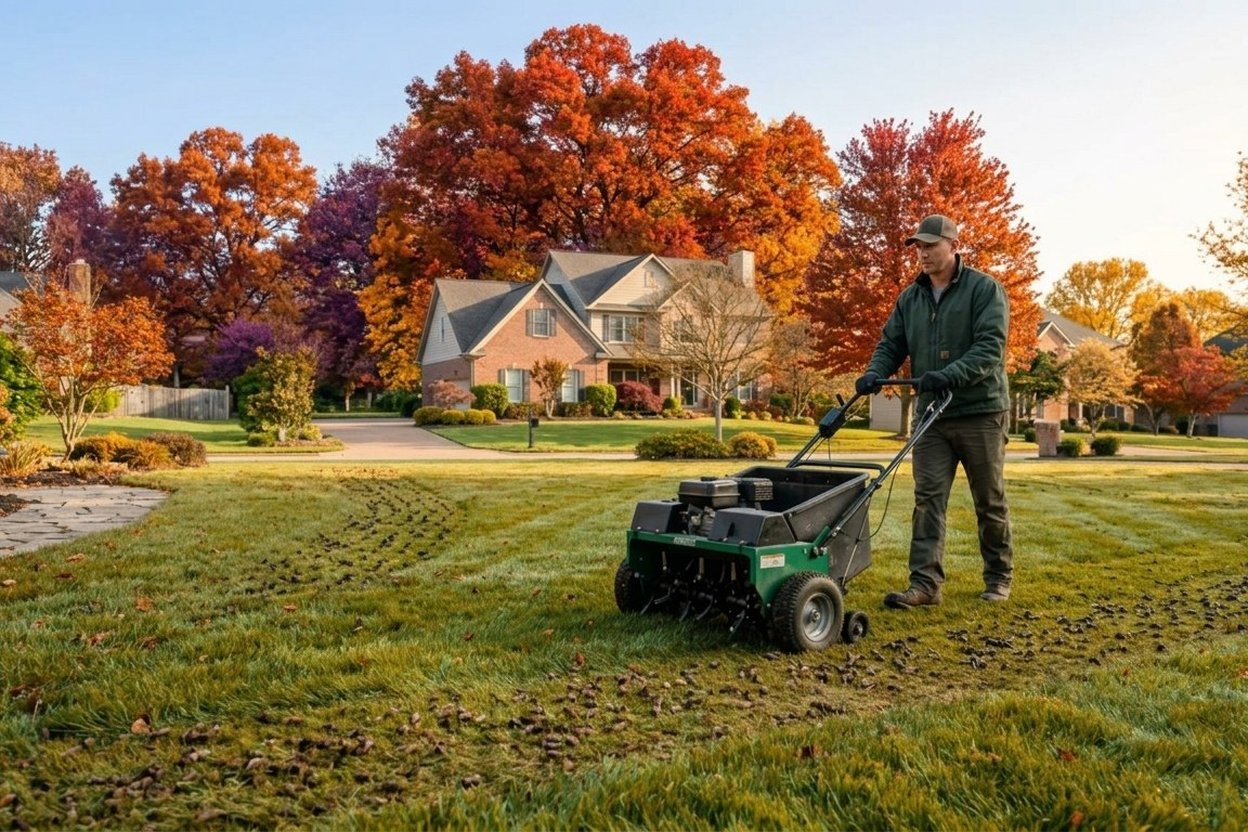
Late October core aeration can work if the grass is still growing and the soil is moist and unfrozen. Here's how to check, and when to wait.
Jack · golf course superintendent·5 min read·October 14, 2026
When you miss September, you may still have time to aerate before winter. Yes, you can core-aerate your lawn in the second half of October if the grass is still growing and the soil is moist, unfrozen, and workable.
Late aeration can relieve soil compaction and help roots. The trade-off is less time for the grass to recover, so treat aeration and overseeding as separate decisions.
You can still core-aerate in late October if your lawn is growing and the soil has enough moisture for the tines to pull clean plugs. Wisconsin Extension says October aeration remains an option when soil moisture is adequate in its October lawn-care guidance. Pulling cores can relieve compaction and give roots better access to the soil.
A superintendent’s rule on putting greens is to pull cores while the grass can heal. The same test works at home: look for green, actively growing turf and soil that is moist without being waterlogged. If the surface is frozen or saturated, wait.
Late October leaves less recovery time before growth slows for winter. That short window affects overseeding more than aeration. You can aerate now, then plan dormant seeding once the soil is cold enough for seed to wait until spring.
Wisconsin’s lawn-care bulletin identifies September 1 through 30 as the best aeration period, while its October guidance allows the work through the month when soil moisture is adequate. Check the Wisconsin lawn-care bulletin for that earlier preferred window, and use your lawn’s condition to decide whether late October is still workable.
Aeration holes fill faster when your grass is actively growing, so late-season success depends on how much growing weather remains. Kansas State recommends allowing at least four weeks of good growing weather after core aeration, as explained in its guide to aerating your lawn.
Use a quick field check: if your lawn is green and you are still mowing every week or two, the grass is growing. That is a useful sign that it can start filling the holes, though cooler weather leaves less time for that recovery.
Cool-season roots can keep growing while the soil stays above freezing. They grow best when soil temperatures are 50 to 65°F, so root activity may continue after visible top growth slows. Late October can therefore still support root growth even when the lawn needs mowing less often.
Extension calendars place the preferred fall aeration window earlier, while late October sits at the edge of the season in colder regions. Wisconsin and Kansas point to September; Minnesota lists mid-August through mid-October; Pennsylvania places its window in late summer to early fall.
The Minnesota lawn-care calendar ends its fall window in mid-October. That makes late October a tail-end option in the far North, while milder Zone 6 and 7 areas can still have workable conditions. Your lawn’s growth and soil condition provide the practical check.
If fall passes before your lawn is ready, spring is a backup. In northern areas, plan for late April into May or early June, depending on when the soil and turf are ready to work.
Set up the lawn so the tines can pull cores cleanly without pressing wet soil together. The soil should be moist, not wet: dry ground resists tine penetration, while a heavy aerator on saturated soil can compact it. If the soil is dry, water one to two days before aerating.
Use a hollow-tine core aerator. Aim for cores about 2.5 to 4 inches long, and make multiple passes over compacted areas. One pass with common rental tines reaches only about 1.4% of the surface, according to Penn State, so aim for coverage closer to 10%.
Before you start, flag sprinkler heads, shallow irrigation lines, and dog-fence wire buried less than 3 inches deep. This helps you avoid hitting buried equipment as the machine moves across the lawn.
Leave the cores on the grass for a day or two to dry, then mow to break them up. If the soil turns wet before you finish, stop and resume when conditions improve. A clean pass through workable soil gives you better plugs and avoids driving a heavy machine over saturated turf.
Skip overseeding in the second half of October because seedlings need about four to six weeks to establish before hard freezes. Penn State’s guidance for lawn management through the seasons does not recommend seeding after mid-October in most of Pennsylvania.
You can still aerate now and plan dormant seeding later. Wait until soil temperatures fall below 40°F, then seed into the aeration holes so the seed remains dormant until spring. In Minnesota, that timing begins in early November; in Nebraska, it begins around mid-December.
For low- and medium-maintenance lawns, skip October nitrogen. Late nitrogen increases snow mold risk, so leave that fertilizer out of the fall plan and focus on aeration if the turf and soil are ready.
Wait for spring if the lawn is frozen or frosted, the soil is waterlogged, or the turf does not need aeration. Sandy soil, little compaction, or a thatch layer under 3/4 inch are reasons to leave the lawn alone.
Tall fescue and perennial ryegrass recover slowly from aeration. If your lawn is mostly either grass, plan to dormant seed into the holes or wait for a spring aeration window.
Snow mold hit many Minnesota lawns last spring. Learn the fall changes that reduce it: final mowing height, leaf handling, and fertilizer timing.
Move carved pumpkins off the turf within days to compost, a drop-off, or a garden bed so the grass doesn't die underneath. Local rules vary.
Frost doesn't end mowing season. Learn when to mow after a frost and how to protect your lawn until growth stops for the season.