Mowers & Equipment
Are Robot Mowers Good Enough Yet? A Golf Course Superintendent Judges the Cut
A golf course superintendent's verdict on robot mowers: why the cut beats rotary mowers, where they fall short, costs, and who should buy one.
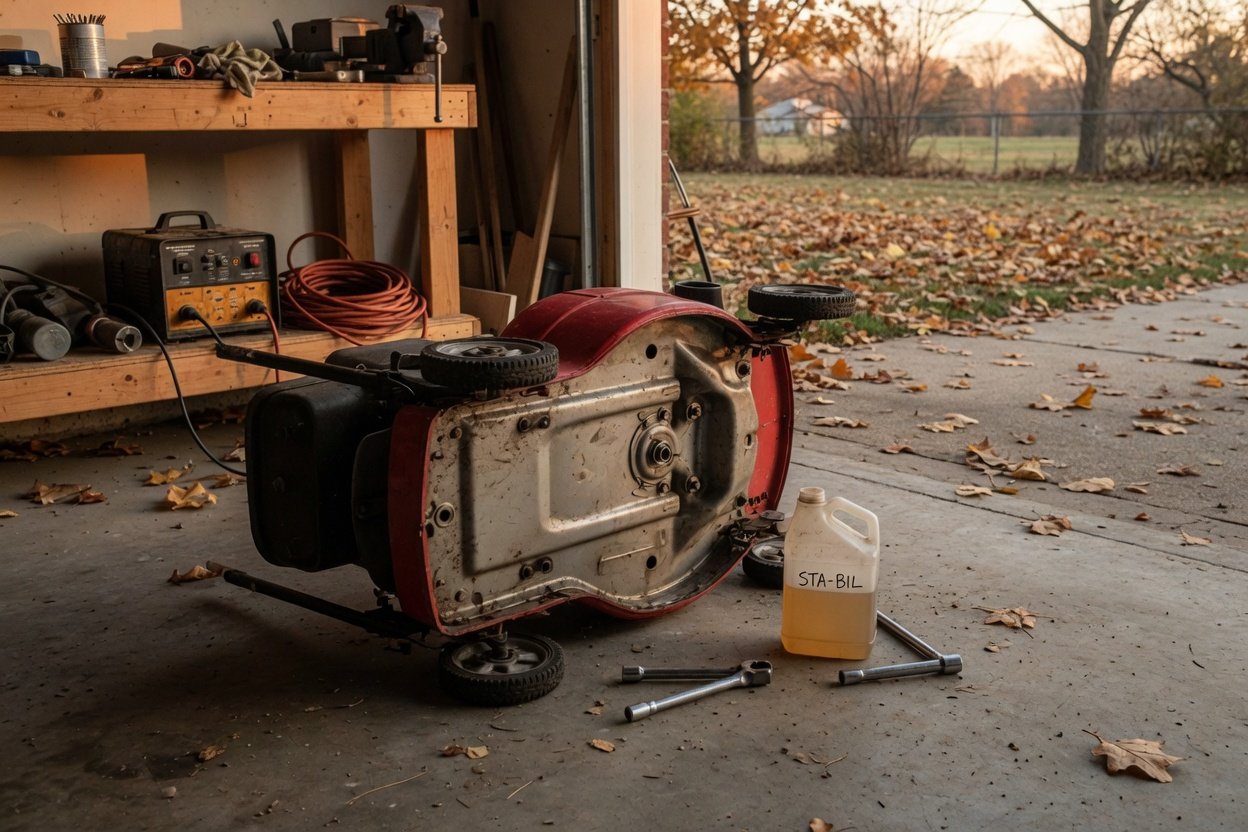
How a golf course shop puts mowers away for winter, scaled down for your garage: fuel, oil, blade, deck, battery, and tires, so it starts on the first pull in spring.
Jack · golf course superintendent·4 min read·October 3, 2026
Every November, the golf course shop turned into an assembly line. Every mower, every blower, every utility vehicle came through, got serviced, and got parked for winter. In spring they all started. At home, most mower problems in April are caused by how they were put away in October. Here's the routine, scaled down to a garage.
Old gas is the number one reason mowers don't start in spring. Gasoline breaks down in storage, and ethanol blends absorb water. Over a winter, that turns into varnish and gum that clogs the carburetor's tiny passages.
Two good options:
If you can find ethanol-free gas, it stores much better.
Used oil holds acids and combustion byproducts that sit on engine parts all winter. Change it in fall, with the engine warm so the oil drains easily. Use the type and amount in your manual.
Before you touch the blade or tip the mower, pull the spark plug wire off the plug. That keeps the engine from accidentally starting. While it's off, check the plug. If it's fouled or worn, replace it now so you're ready for spring.
Wet grass clippings packed under the deck hold moisture all winter and rust the deck through. Tip the mower with the air filter and carburetor side up (check your manual) and scrape out the clippings. A plastic putty knife works well. Some mowers have a washout port you can hook a hose to.
A dull blade tears grass instead of cutting it, and torn tips turn brown and invite disease. Take the blade off, sharpen it, and balance it, or swap in a new one. Doing it now means you're not scrambling in spring.
Clean or replace it. A clogged filter makes the engine run rich and hard to start.
For riding mowers and electric-start push mowers:
For battery-powered mowers, follow the manufacturer's storage advice. Most say to store the battery partly charged, indoors, not in a cold garage.
Check tire pressure on riding mowers; low tires can flat-spot over winter. Grease any fittings while you're at it.
Reconnect the spark plug, check the oil level, fill with fresh gas, and you should be mowing on the first or second pull.
Ten minutes of work in fall saves you a trip to the repair shop in spring, and the shops are backed up for weeks once the first warm weekend hits.
If your mower is done for the year, check when to stop mowing for the season to make sure the last cut was the right height.
A golf course superintendent's verdict on robot mowers: why the cut beats rotary mowers, where they fall short, costs, and who should buy one.
A small lawn under 5,000 square feet needs a basic mower, not a $6,000 one. Learn the cut height, blade, and upkeep that actually matter.
Battery or gas mower in snow country: how cold affects each one, the right fall mowing height, and how to store each over winter.