Fall & Winter
Snow mold on Minnesota lawns last spring: what to change this fall
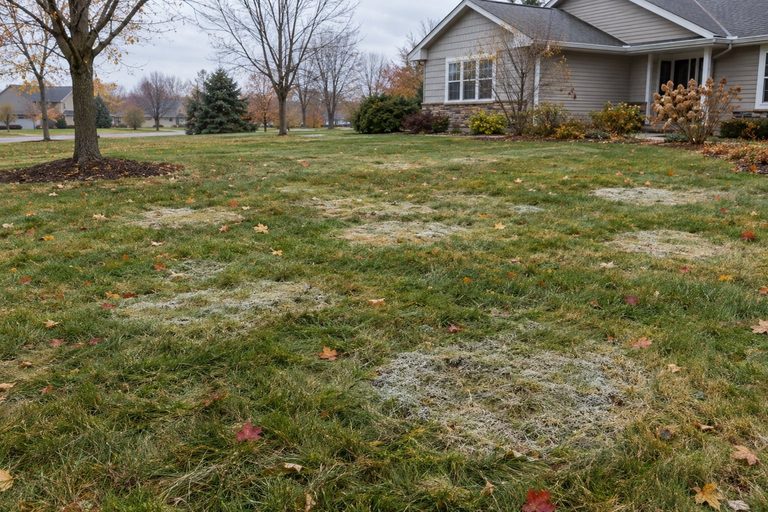
Snow mold hit many Minnesota lawns last spring. Learn the fall changes that reduce it: final mowing height, leaf handling, and fertilizer timing.
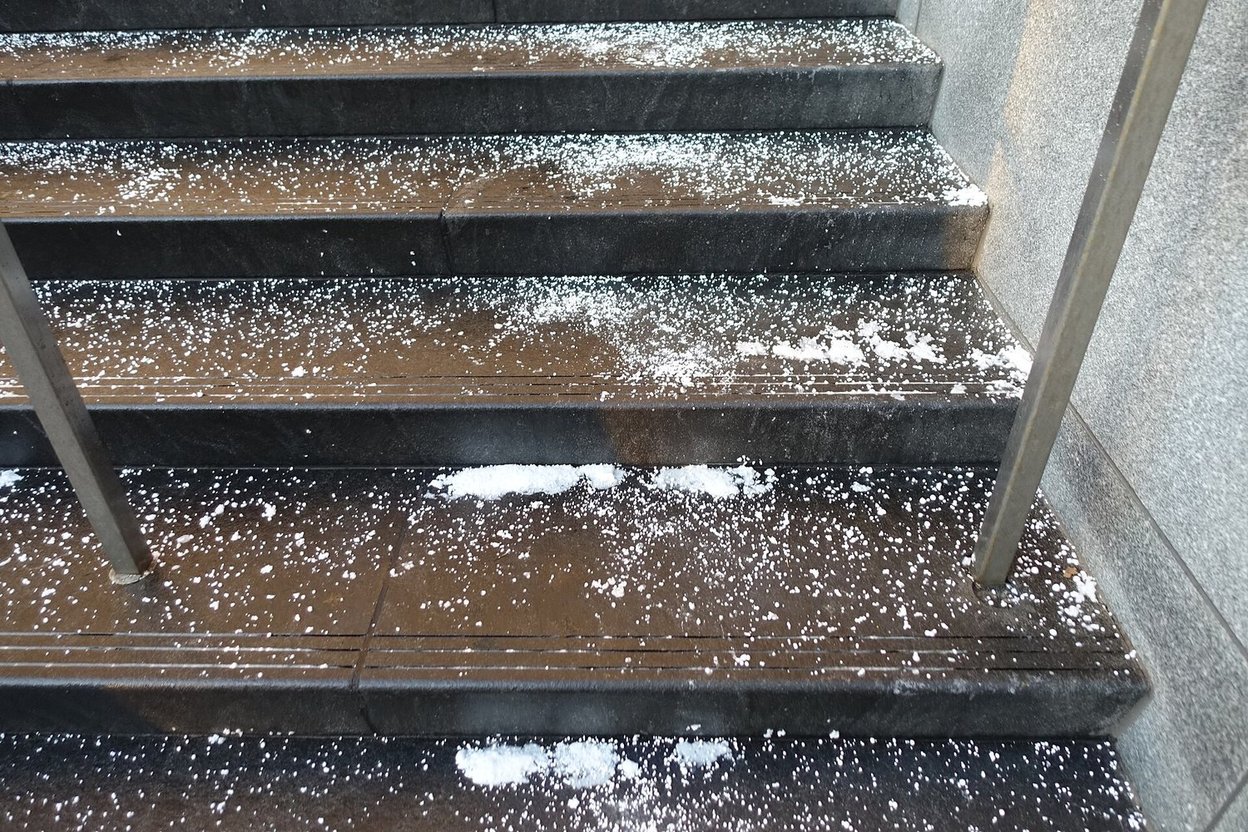
De-icing salt burns grass along driveways and kills evergreens near the road. How salt damages plants, what to do before winter, safer ice-melt choices, and spring repair.
Jack · golf course superintendent·3 min read·October 2, 2026
Every spring in the snow belt, there's a brown strip along every driveway, sidewalk and street. The grass is dead or thin, the shrubs facing the road have brown needles on one side, and the boulevard trees struggle. That's salt damage. You can't stop the plows, but you can do a lot to limit it, and fall is when to get ready.
Most de-icers are chloride salts: sodium chloride (rock salt) is the most common. Salt damages plants two ways:
If the same strip dies every year, plant tougher things there: salt-tolerant shrubs and groundcovers, or ornamental grasses that can be cut back each spring.
Salt is part of life up north. A little planning in October means a lot less brown in April.
Photo: 388 Greenwich Street Plaza td (2022-02-01) 016_016.jpg) by Tdorante10, CC BY-SA 4.0.
Snow mold hit many Minnesota lawns last spring. Learn the fall changes that reduce it: final mowing height, leaf handling, and fertilizer timing.
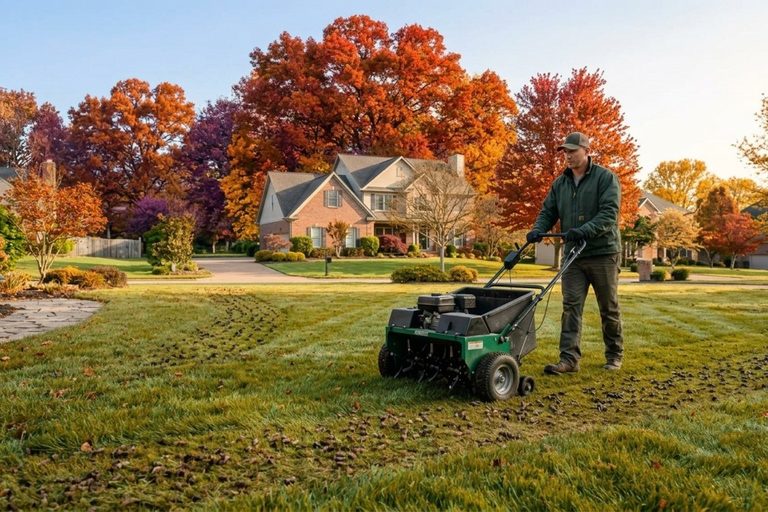
Late October core aeration can work if the grass is still growing and the soil is moist and unfrozen. Here's how to check, and when to wait.
Move carved pumpkins off the turf within days to compost, a drop-off, or a garden bed so the grass doesn't die underneath. Local rules vary.