Fall & Winter
Snow mold on Minnesota lawns last spring: what to change this fall
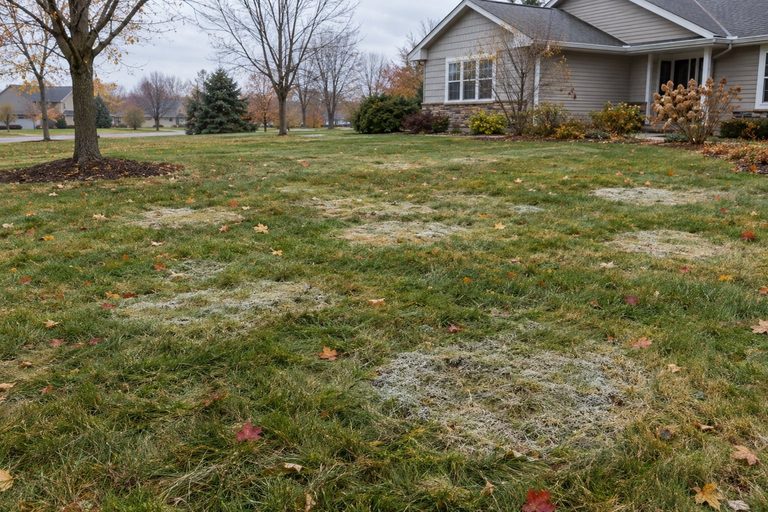
Snow mold hit many Minnesota lawns last spring. Learn the fall changes that reduce it: final mowing height, leaf handling, and fertilizer timing.
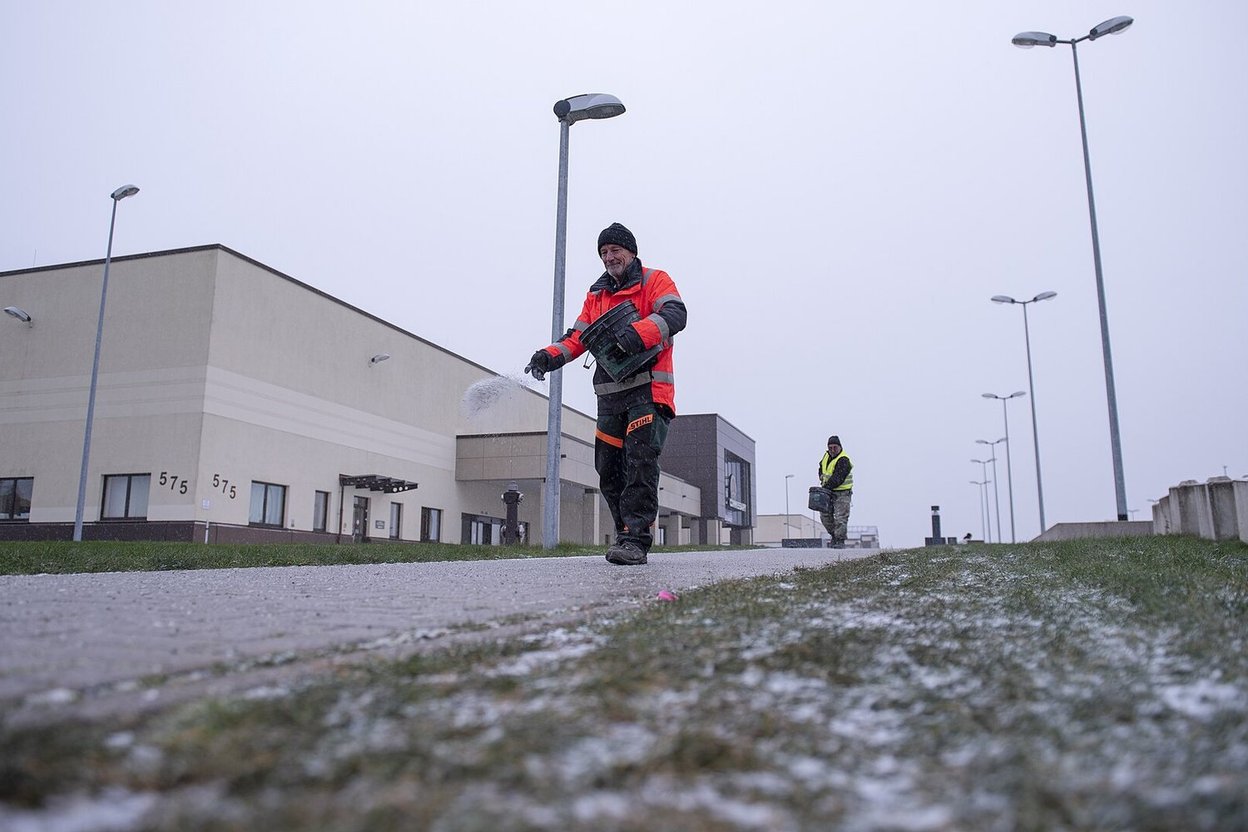
Rock salt is cheap, but it burns grass, pits concrete and hurts dogs' paws. What each ice melt does, which is gentler on your lawn and driveway, and how to use less of any of them.
Jack · golf course superintendent·3 min read·October 4, 2026
Every winter the same yards show the same damage in spring: a strip of dead grass along the driveway, crumbling spots on the front steps, and shrubs browned on the side facing the walk. Most of it comes from ice melt. You can't skip it when the steps are glare ice, but you can choose a better one and use a lot less.
Ice melts lower the freezing point of water. Spread them on ice and they make a brine that melts down through it and breaks its grip on the pavement. Each product works down to a different temperature, and each has different side effects.
Products marketed as pet-safe are usually based on magnesium chloride, CMA, or other blends. They're gentler, but "pet-safe" isn't a regulated term. Still wipe your dog's paws after walks.
Sand and kitty litter don't melt anything, but they add traction. Mixed with a small amount of ice melt, they let you use far less chemical. The downside is tracking it inside and sweeping it up in spring.
This is where golf courses and good grounds crews save the most:
Water salt-damaged areas of lawn deeply in early spring to flush salt below the roots. Then reseed bare spots. See road salt damage on lawns and shrubs for the full fix.
Choosing a gentler product helps, but the biggest difference is simply using less.
Photo: Winter’s no match for the 52nd CES (7574398).jpg) by U.S. Air Force photo by Tech. Sgt. Anthony Plyler, Public domain.
Snow mold hit many Minnesota lawns last spring. Learn the fall changes that reduce it: final mowing height, leaf handling, and fertilizer timing.
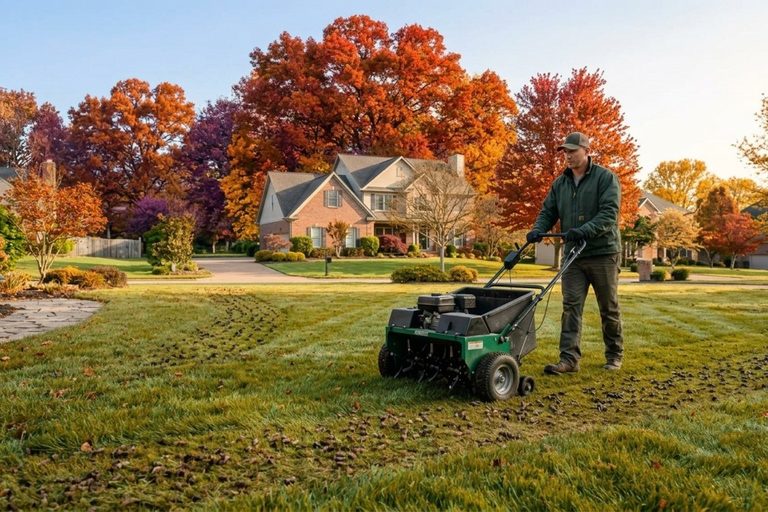
Late October core aeration can work if the grass is still growing and the soil is moist and unfrozen. Here's how to check, and when to wait.
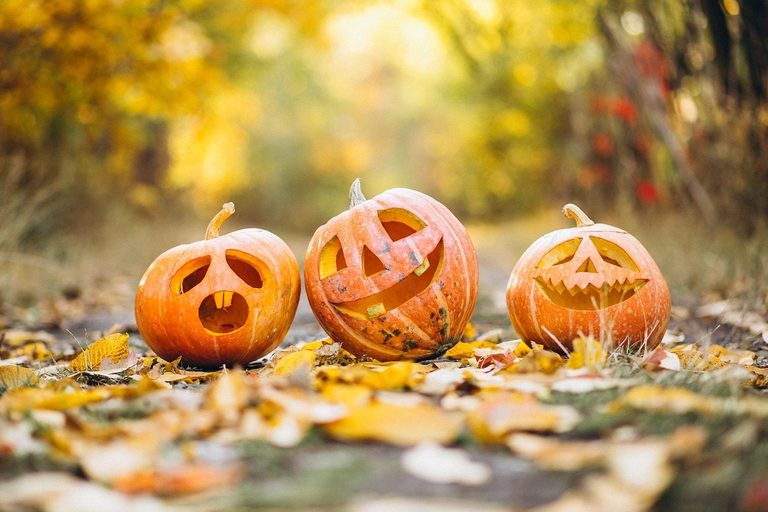
Move carved pumpkins off the turf within days to compost, a drop-off, or a garden bed so the grass doesn't die underneath. Local rules vary.