Soil & Feeding
Lime for Northern Lawns: When and How Much
Lime fixes acid soil. It doesn't fix every thin lawn. How to tell if your lawn needs it, calcitic vs. dolomitic, how much to put down at once, and why fall is…
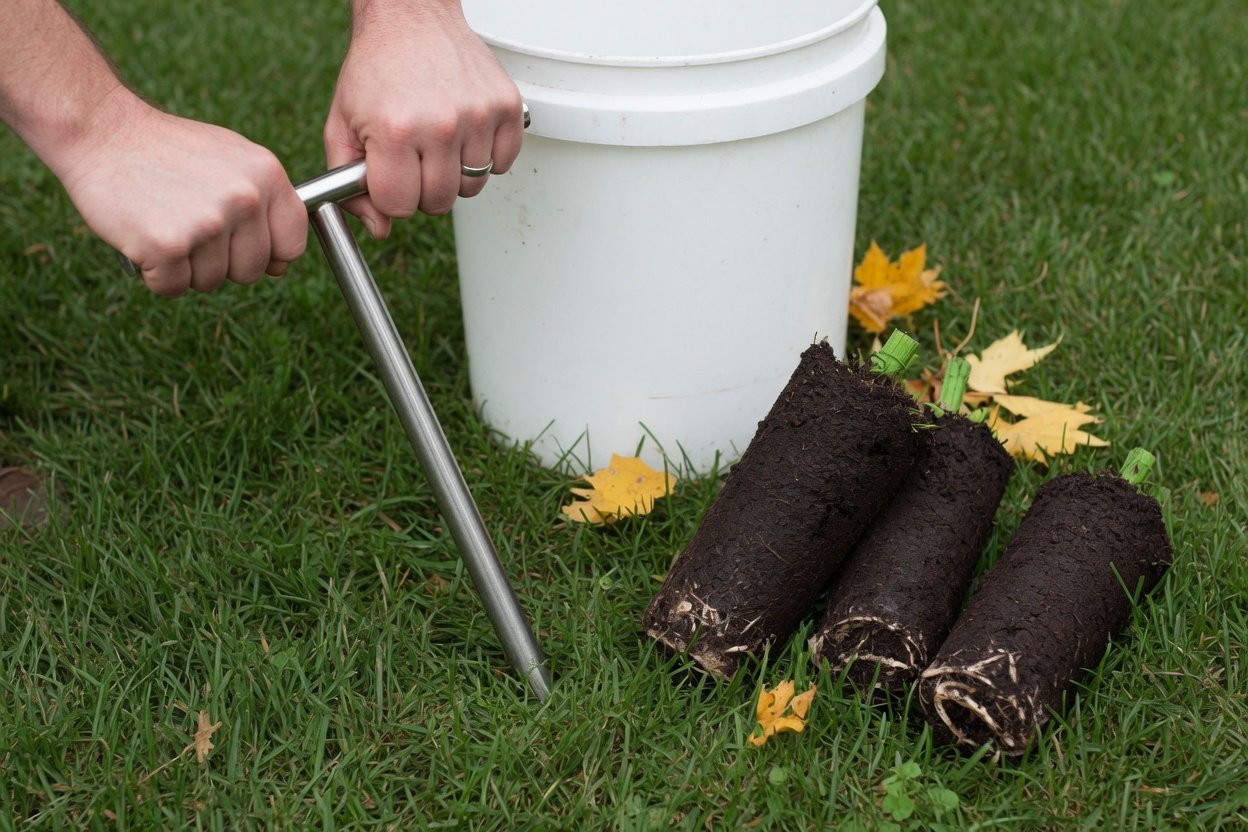
A soil test is the cheapest way to stop guessing on lime and fertilizer. Why fall is the best time to test, how to take a good sample, and what to do with the results.
Jack · golf course superintendent·3 min read·October 2, 2026
On a golf course, nobody would dream of fertilizing without a soil test. At home, most people buy whatever bag is on sale and spread it four times a year. A soil test costs about the same as one bag of fertilizer and tells you exactly what your lawn needs. And fall is the best time to take one.
A bad sample gives you a bad answer. Do it right:
Many state land-grant universities and their extension services run soil testing labs, and there are private labs too. A basic test usually reports pH, phosphorus, potassium, and organic matter, with recommendations. Some labs ask what you're growing; tell them it's a lawn and what kind of grass.
Our guide on how to read a professional soil test report walks through it in detail. The short version:
Every three to four years is plenty for an established lawn, or before a big renovation. Keep your reports so you can see the trend.
The test turns lawn care from guessing into a plan. Take your samples this month, send them off, and you'll have your answers before the snow flies.
Lime fixes acid soil. It doesn't fix every thin lawn. How to tell if your lawn needs it, calcitic vs. dolomitic, how much to put down at once, and why fall is…
pH affects every nutrient your grass can or cannot access. Many northern soils run acidic, so lime is often needed (some, especially in the Plains and mountain West, run alkaline, so test…
Most homeowners fertilize blind. A professional soil test from a lab like the University of Illinois or a private service removes the guesswork and saves money while protecting the environment. Follow the…