Trees & Shrubs
Emerald Ash Borer: Treat or Remove Your Ash Tree?
How to decide whether to treat or remove your ash tree for emerald ash borer: the canopy rule, size limits, timing, and what each choice costs.
Which shrubs, ornamental grasses and lawn grasses actually survive road salt along curbs and driveways, which to avoid, and how to plant them.
Jack · golf course superintendent·9 min read·October 6, 2026
For the strip along the street and the edges of the driveway, use plants that university trials and extension lists rate as salt-tolerant. For shrubs, go with junipers, mugo pine, rugosa rose, sumac, potentilla, alpine currant, spirea and ninebark. For ornamental grasses, use switchgrass, little bluestem, Karl Foerster feather reed grass or blue fescue. For turf, use fine fescues (creeping red, hard, sheep and Chewings fescue) instead of straight Kentucky bluegrass. Keep arborvitae, boxwood and red twig dogwood back from the pavement.
On a golf course, the cart path edges and the strip along the entrance road take the most abuse. Your curb strip is the same kind of ground. Picking the right plant fixes most of it, so here's how.
Salt gets to plants two ways, and they cause different damage.
Spray. Passing cars throw salty slush onto branches and needles. You see it in early spring as browned needles, dead buds and dieback on the side facing the road. University of Wisconsin Extension says most spray damage happens within 60 feet of the road, though sensitive plants can show it 1,000 feet or more from a major highway.
Soil. Plow piles and meltwater soak salt into the root zone. That damage builds slowly, over several years, and Wisconsin puts most of it within 30 feet of the road. The plant gets thinner each spring and leafs out later, and nobody connects it to salt until half of it is dead.
Some plants handle one kind of salt better than the other, so look at where yours will sit. A shrub at the curb gets spray plus a plow pile on top. A shrub 10 feet up the driveway mostly gets runoff from the salt you put down yourself.
These show up as salt-tolerant on the northern extension lists I trust (Wisconsin, UMass, Penn State). All of them are hardy across most of the northern half of the country, but check the hardiness zone on the tag.
Evergreens:
Deciduous:
Viburnums are mixed. Wisconsin lists nannyberry, arrowwood and American cranberrybush as tolerant. UMass puts viburnum on its sensitive list. If you want one near the road, plant nannyberry and keep it out of the plow pile.
These are the most forgiving plants you can put in a curb strip. You cut them to the ground every spring, so any salt burn on the old blades gets cut off with them. Wisconsin Extension lists these as salt-tolerant:
Northern sea oats likes some shade and moisture, so use it on the shady side of the drive and not the hot, open strip.
Tip from the course: keep anything taller than about 30 inches away from where the driveway meets the street. You need to see cars and kids coming. Short grasses or creeping juniper go at the corners, and the tall stuff goes in the middle of the strip.
This is where most lawns go wrong. Kentucky bluegrass is a great grass almost everywhere else in the yard. On salty roadsides it fails. The University of Minnesota tested 75 cool-season turfgrasses for roadside salt tolerance, and its turf program reports that bluegrass "is not very salt tolerant on Minnesota roadsides."
The grasses that survived were the fine fescues: slender creeping red, strong creeping red, hard, Chewings and sheep fescue. The salt-tolerant roadside mix that came out of that work is mostly fine fescue, with about 20% bluegrass kept in so the sod holds together. Fine fescues also want less fertilizer and water than bluegrass. That suits a curb strip nobody waters.
Alkaligrass ('Fults', 'Salty') used to be the go-to salt grass, and it handles salt well. Minnesota found it establishes slowly and gets crowded out of mixes over time, so it's no longer the backbone of their recommendation.
In practice, seed the strip with a fine fescue blend or a mix labeled for roadside salt tolerance. Expect it to look a little finer and more blue-green than the bluegrass in the rest of your lawn. That's normal.
These show up on the sensitive lists:
Wisconsin says to keep salt-sensitive plants 30 to 40 feet from city streets and 60 to 100 feet from highways. On a city lot you can't always do that. If you can't, plant something tolerant in the front row and keep the sensitive plants up by the house.
Shrubs and container grasses: Early October is fine for container shrubs across most of the northern US, as long as you get them in a few weeks before the ground freezes and keep them watered until it does. See planting trees in fall and watering before the ground freezes. Ornamental grasses settle in better from spring planting in the coldest zones. If you plant them now, mulch the crowns.
Grass seed: Fine fescue needs warm enough soil to germinate. In much of the north it's now late to seed the strip and get it established. Check whether it's too late to overseed and soil temperature. If you missed the window, dormant seeding in November works well on a curb strip. Freeze and thaw work the seed in, and it comes up in spring before the weeds.
Set the bed up to drain. Salt that can't drain out stays in the root zone. Grade the strip so meltwater runs off, and don't build a soil berm that holds slush against the plants.
Tolerant plants still do better if you flush the salt out:
The road salt damage post covers the full fix. Cutting down on the salt itself helps too, so switch your driveway ice melt and shovel before you salt.
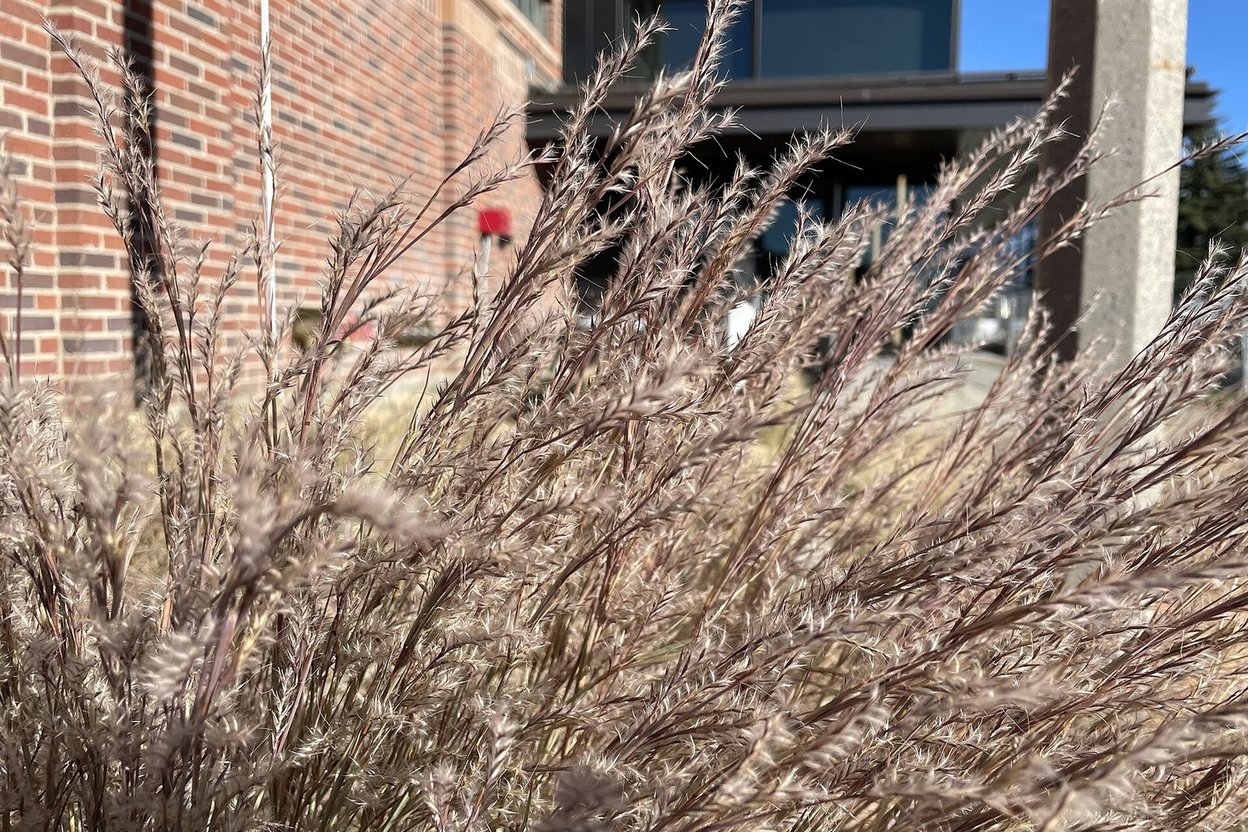
Photo: Andropogon scoparius - little bluestem - 53323389116 by Matt Lavin, CC BY-SA 2.0.
How to decide whether to treat or remove your ash tree for emerald ash borer: the canopy rule, size limits, timing, and what each choice costs.
Heavy wet snow splits arborvitae and flattens yews. How to tie them up before winter, how to clear snow safely, why you should never whack an iced branch, and how to fix…
When the snow comes, deer go after arborvitae, yews and young trees. Which plants they love, the fences and wraps that actually stop them, repellents, and when to put protection up.