Trees & Shrubs
Salt-Tolerant Shrubs and Grasses for Curb Strips and Driveways
Which shrubs, ornamental grasses and lawn grasses actually survive road salt along curbs and driveways, which to avoid, and how to plant them.
Heavy wet snow splits arborvitae and flattens yews. How to tie them up before winter, how to clear snow safely, why you should never whack an iced branch, and how to fix splits in spring.
Jack · golf course superintendent·3 min read·October 4, 2026
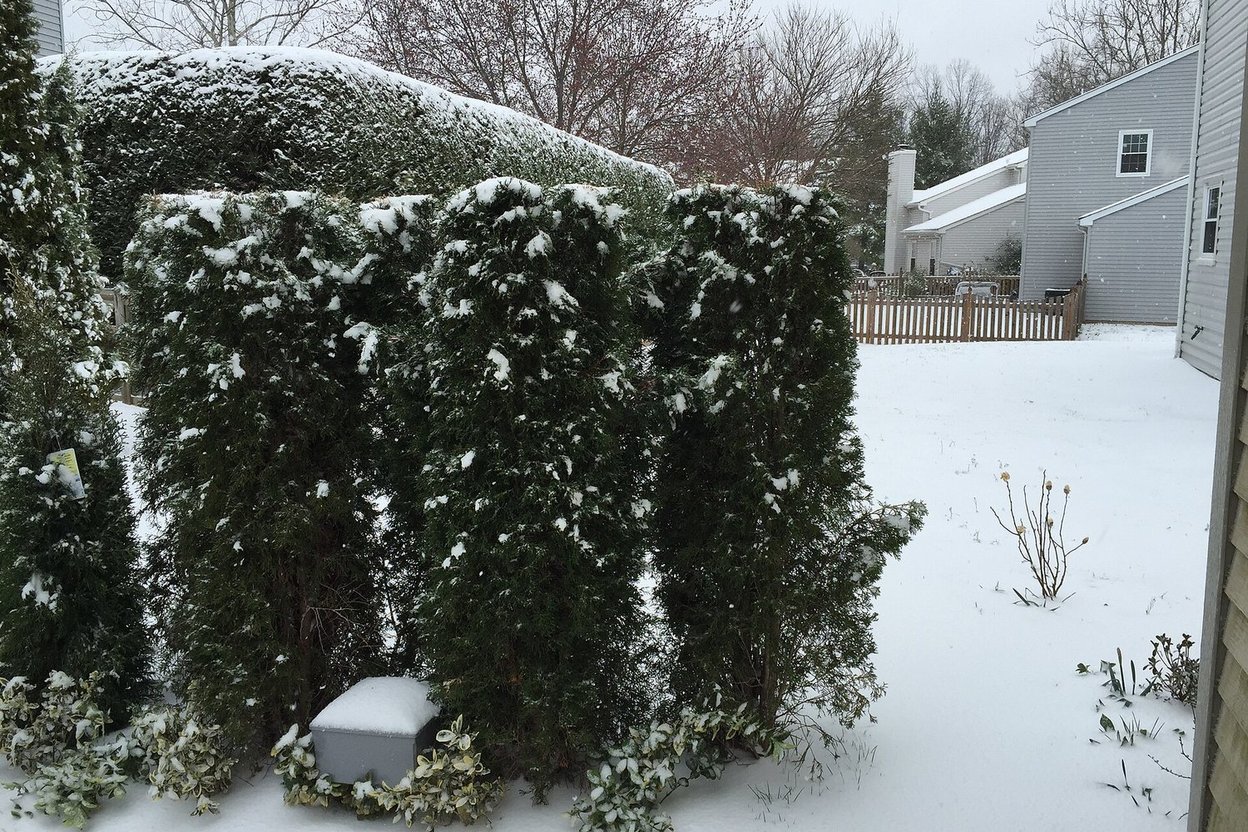
After a heavy, wet snowfall, I'd see the same thing on every street: arborvitae bent over like they'd been shot, split open from the top, and yews flattened. Some recover. Some are ruined. A little prep in fall and a gentle hand after a storm save most of them.
For multi-stemmed arborvitae and upright junipers:
For prized shrubs near the house, a simple A-frame of boards over them protects against snow sliding off the roof.
Don't try to knock ice off branches. Frozen branches are brittle and snap easily. Let ice melt on its own. Branches bent by ice often straighten as it melts.
If you're planting new, consider:
Tie them in fall, brush them gently in a storm, and leave the ice alone. That's most of the battle.
Photo: 2017-03-14 09 23 34 Emerald Green Arborvitae coated in snow and ice pellets alon by Famartin, CC BY-SA 4.0.
Which shrubs, ornamental grasses and lawn grasses actually survive road salt along curbs and driveways, which to avoid, and how to plant them.
How to decide whether to treat or remove your ash tree for emerald ash borer: the canopy rule, size limits, timing, and what each choice costs.
When the snow comes, deer go after arborvitae, yews and young trees. Which plants they love, the fences and wraps that actually stop them, repellents, and when to put protection up.