Trees & Shrubs
Salt-Tolerant Shrubs and Grasses for Curb Strips and Driveways
Which shrubs, ornamental grasses and lawn grasses actually survive road salt along curbs and driveways, which to avoid, and how to plant them.
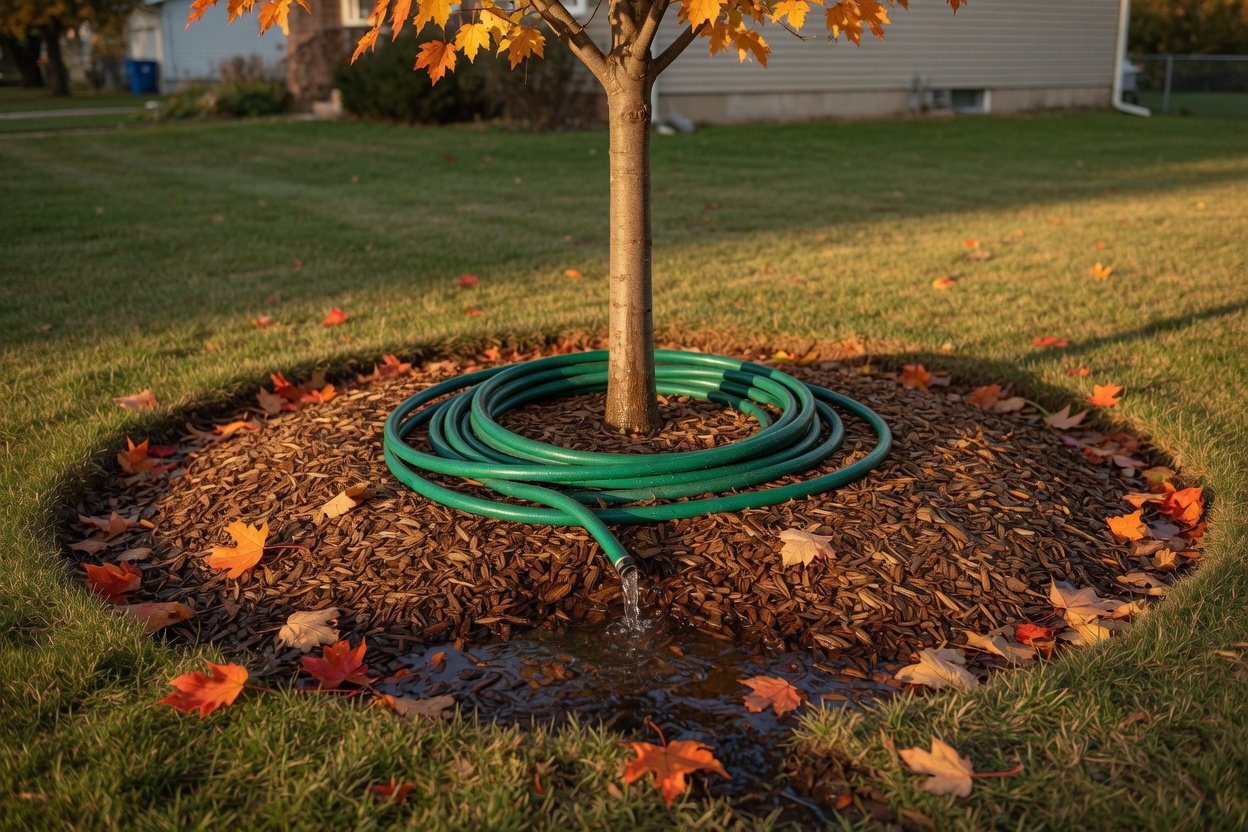
A dry fall sends trees and evergreens into winter thirsty, and winter burn follows. How much to water, how deep, which trees need it most, and when to stop.
Jack · golf course superintendent·3 min read·October 2, 2026
Most people stop watering when the lawn goes dormant. Trees don't stop. Roots keep growing in fall as long as the soil isn't frozen, and evergreens keep losing water through their needles all winter long. A tree that goes into winter with dry roots is set up for damage you won't see until spring: brown needles, dieback, and a slow decline that looks like disease.
The goal is moist soil 12 inches deep in the root zone, which extends well beyond the trunk, roughly out to the drip line (the edge of the branches) and beyond.
Check by pushing a long screwdriver into the soil. It should slide in easily to several inches if the soil is moist.
Keep watering through dry spells until the ground freezes. On a mild winter day when the soil thaws and it's above about 40 degrees, a midday watering can help evergreens in a dry winter. Just don't leave hoses connected outside overnight, and drain them afterward.
Two to three inches of shredded wood mulch over the root zone holds moisture and evens out soil temperature. Keep it pulled back a few inches from the trunk; mulch piled against the bark (a "mulch volcano") invites rot and rodents.
A good soak in October is cheap insurance for a tree that took years to grow. It's one of the easiest jobs on the fall list, right after the last mow of the season.
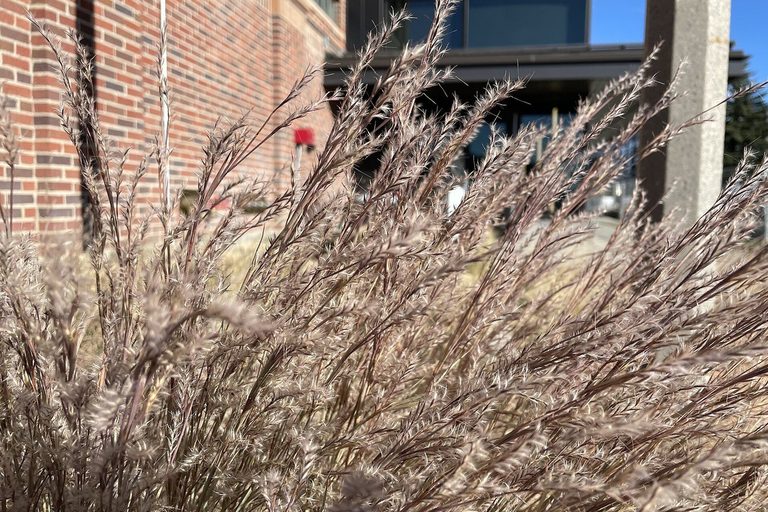
Which shrubs, ornamental grasses and lawn grasses actually survive road salt along curbs and driveways, which to avoid, and how to plant them.
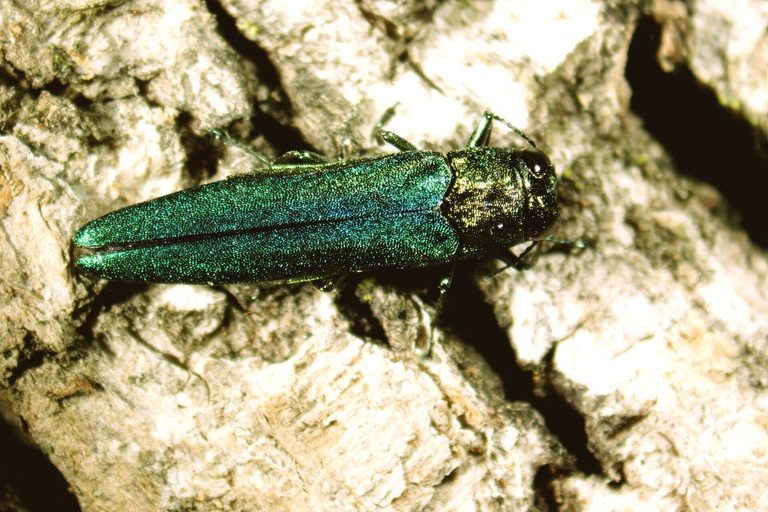
How to decide whether to treat or remove your ash tree for emerald ash borer: the canopy rule, size limits, timing, and what each choice costs.
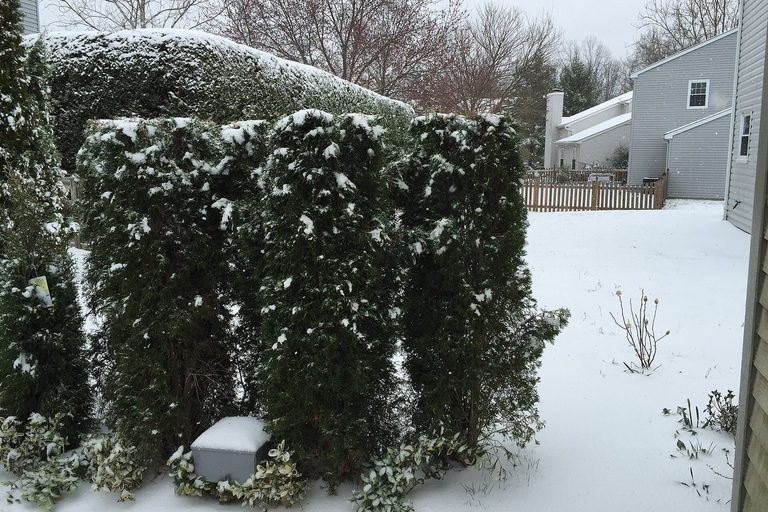
Heavy wet snow splits arborvitae and flattens yews. How to tie them up before winter, how to clear snow safely, why you should never whack an iced branch, and how to fix…