Fall & Winter
Snow mold on Minnesota lawns last spring: what to change this fall
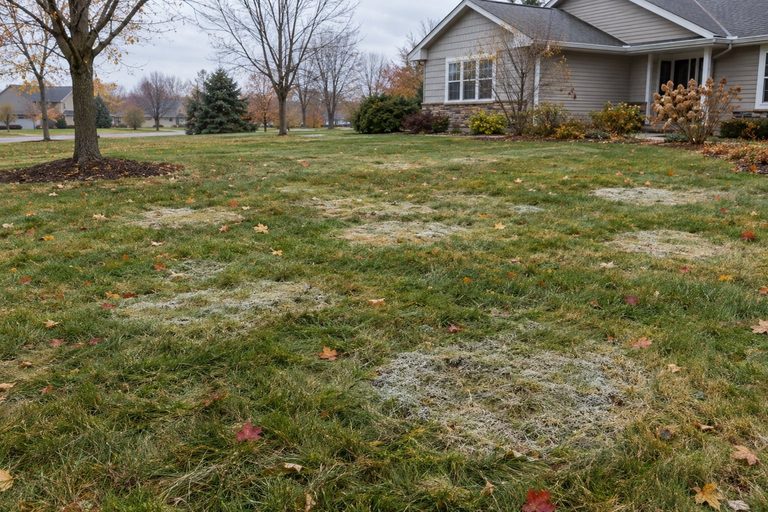
Snow mold hit many Minnesota lawns last spring. Learn the fall changes that reduce it: final mowing height, leaf handling, and fertilizer timing.
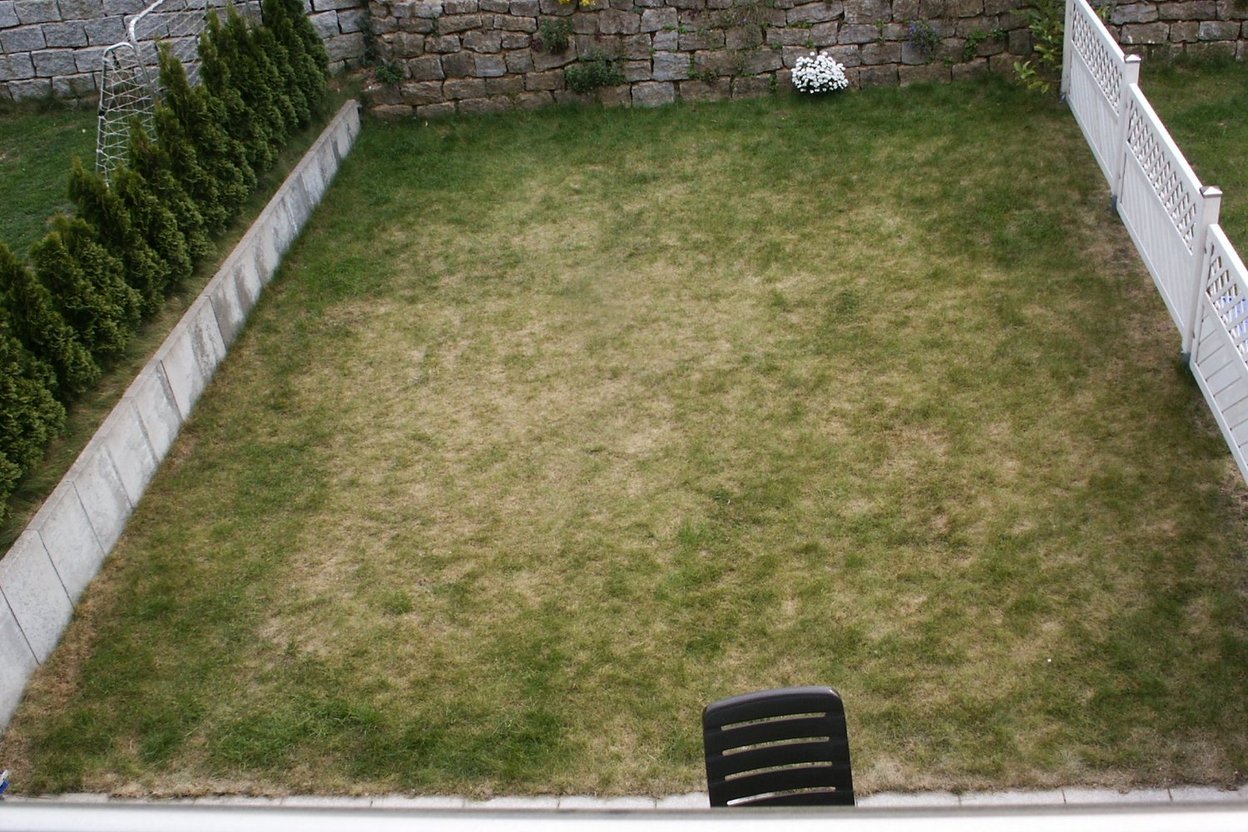
Seed sitting on a spongy layer of thatch dries out before it can root. How to measure thatch, why it matters for overseeding, and what to do about it.
Jack · golf course superintendent·3 min read·October 5, 2026
People spread a lot of good seed on a lawn that was never going to take it. The reason is often hiding right under the grass: thatch.
Thatch is a layer of dead and living stems, roots and runners between the green grass and the soil. A little is normal and even helpful. It cushions the lawn and holds some moisture.
Trouble starts when it builds up past about half an inch. Then it acts like a sponge: it holds water near the surface and dries out fast on top, and roots grow in the thatch instead of the soil.
Seed needs to touch soil. Seed sitting on top of a thick thatch layer:
That's money and a season gone.
Cut a small wedge out of the lawn with a knife or a trowel, a couple of inches deep. Look at the side:
Measure the spongy layer. Under half an inch, you're fine. Over that, deal with it before you seed.
Too much nitrogen, too much water, mowing too low, and some grass types (Kentucky bluegrass spreads by rhizomes and can build more thatch). Healthy soil life breaks thatch down; heavy pesticide use can slow that.
Fall is a good time to aerate in the northern US. If you're past the seeding window, aerate now anyway, and seed next August or dormant seed later. See is it too late to overseed in October?.
On the golf course, controlling thatch was a constant job on greens and fairways. At home, a yearly check with a trowel is usually enough.
Photo: Rasen vor dem Vertikutieren by Andreas Goerrings (user Klugo), Public domain.
Snow mold hit many Minnesota lawns last spring. Learn the fall changes that reduce it: final mowing height, leaf handling, and fertilizer timing.
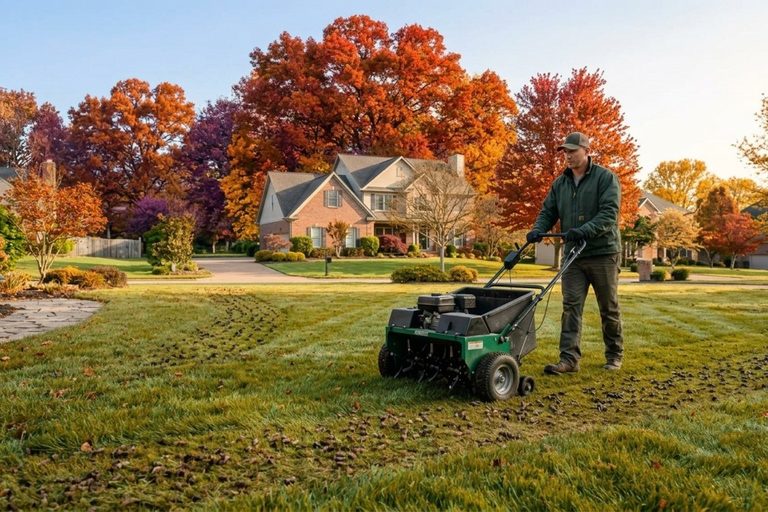
Late October core aeration can work if the grass is still growing and the soil is moist and unfrozen. Here's how to check, and when to wait.
Move carved pumpkins off the turf within days to compost, a drop-off, or a garden bed so the grass doesn't die underneath. Local rules vary.