Fall & Winter
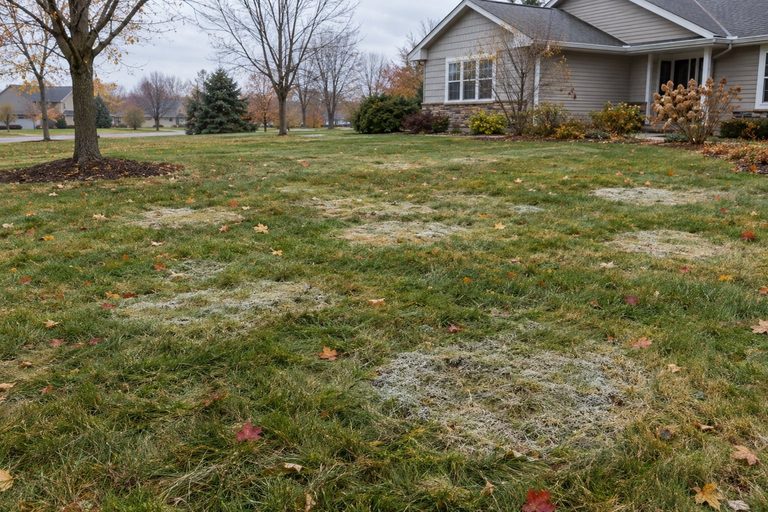
Snow mold on Minnesota lawns last spring: what to change this fall
Snow mold hit many Minnesota lawns last spring. Learn the fall changes that reduce it: final mowing height, leaf handling, and fertilizer timing.
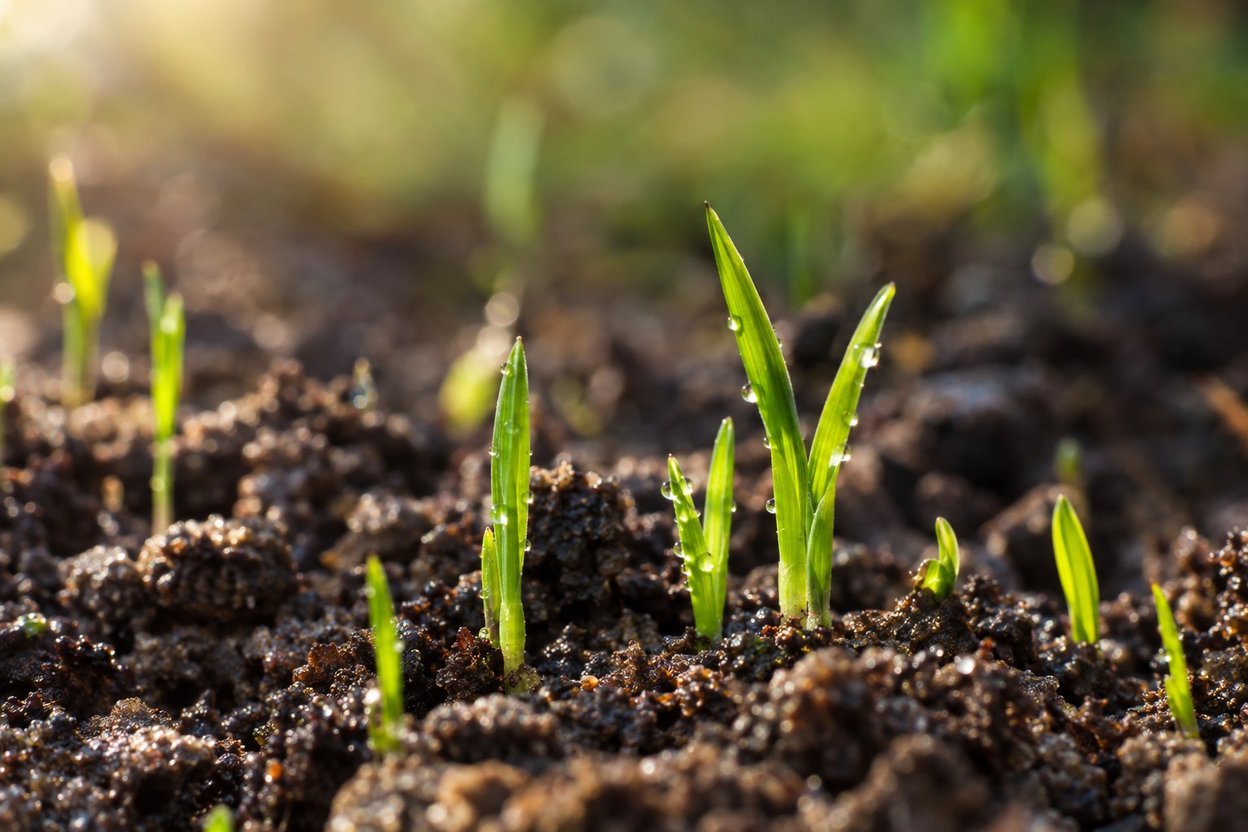
New grass that looks brown after a cold snap is usually dormant, not hungry. Why more fertilizer now does more harm than good, and how to tell whether seedlings are alive.
Jack · golf course superintendent·2 min read·October 5, 2026
You put seed down in September. It came up, looked great, and then a couple of frosty nights later it looks brown and sad. The bag of fertilizer in the garage is calling your name.
Put it back. In most cases, browned new grass in fall doesn't need more fertilizer.
Cool-season grass slows down and starts going dormant as days get shorter and nights get colder. Young seedlings are thin and have little stored energy, so frost and wind can burn the tips. That's often cosmetic. Dormant isn't dead.
Get down on your knees. Gently pull back the brown blades.
Check a few spots. It's normal for some seedlings not to make it.
If you used a starter fertilizer at seeding, that was the right move. Your seedlings have what they need for now.
For the established parts of your lawn, a late-fall feeding has its place. See late-fall fertilizer. That's a different situation from struggling new seed.
Plan to fill in thin spots by dormant seeding later, or next August. See dormant seeding in November.
Snow mold hit many Minnesota lawns last spring. Learn the fall changes that reduce it: final mowing height, leaf handling, and fertilizer timing.
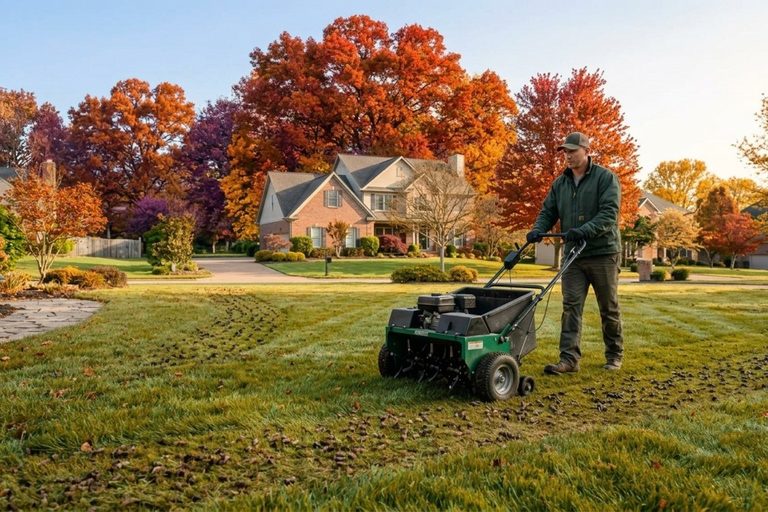
Late October core aeration can work if the grass is still growing and the soil is moist and unfrozen. Here's how to check, and when to wait.
Move carved pumpkins off the turf within days to compost, a drop-off, or a garden bed so the grass doesn't die underneath. Local rules vary.