Fall & Winter
Snow mold on Minnesota lawns last spring: what to change this fall
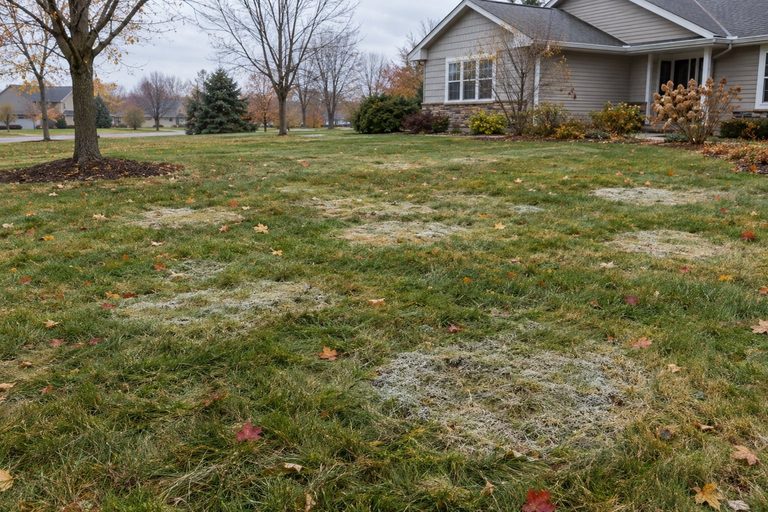
Snow mold hit many Minnesota lawns last spring. Learn the fall changes that reduce it: final mowing height, leaf handling, and fertilizer timing.
Late-seeded grass still needs water, but cold nights change the rules. How often to water, what time of day, and when to stop once the irrigation is blown out.
Jack · golf course superintendent·2 min read·October 5, 2026
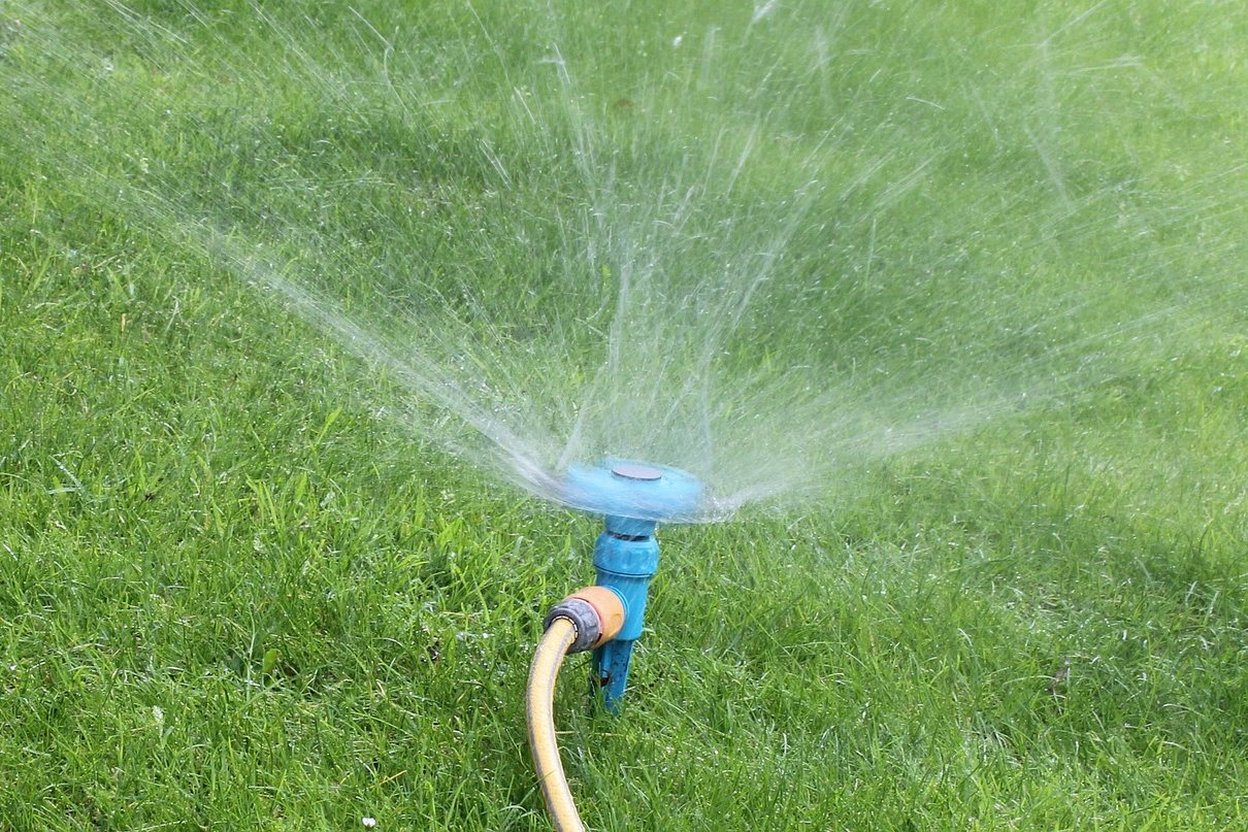
New grass seed needs to stay moist to sprout and root. In September, that means light watering once or twice a day. In October, with nights in the 30s and 40s, the rules change.
Cool air and shorter days mean much less evaporation. Soil that needed water twice a day in early September may stay moist for two or three days now.
The test: push a finger into the soil. If the top half-inch is still damp, skip it. Seed needs moisture, not a puddle.
Short sessions keep the top layer moist without washing seed away or making mud. As seedlings get roots, water a little longer and less often to push the roots deeper.
Many people have their sprinklers winterized in October. See blowing out your irrigation before the freeze. After that:
Once the ground starts freezing at night and staying cold, stop watering. Seedlings that are going dormant don't need it, and ice on the surface can smother them.
A dry, windy fall without rain is the exception. If the soil gets dry to the touch on a mild day, a light drink helps seedlings and young trees go into winter in better shape. See water trees before the ground freezes.
Constant soggy soil in cold weather rots seed, invites damping-off disease, and makes the new grass weak. When in doubt, check before you water.
Photo by bluebudgie on Pixabay.
Snow mold hit many Minnesota lawns last spring. Learn the fall changes that reduce it: final mowing height, leaf handling, and fertilizer timing.
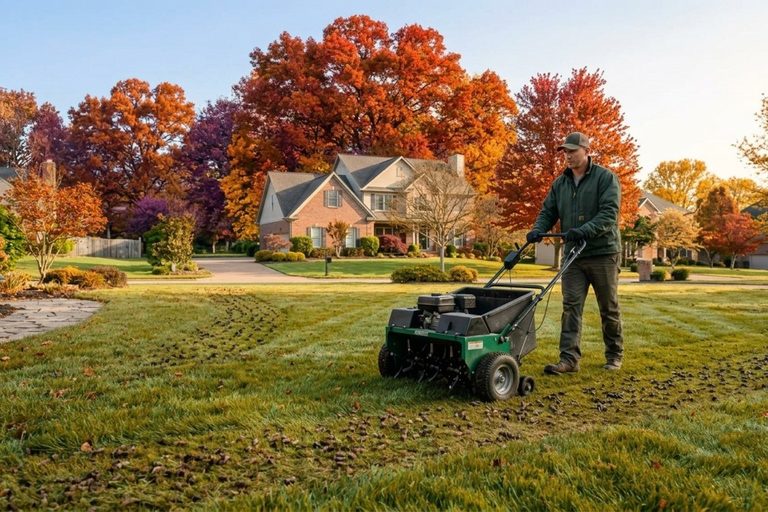
Late October core aeration can work if the grass is still growing and the soil is moist and unfrozen. Here's how to check, and when to wait.
Move carved pumpkins off the turf within days to compost, a drop-off, or a garden bed so the grass doesn't die underneath. Local rules vary.