Trees & Shrubs
Salt-Tolerant Shrubs and Grasses for Curb Strips and Driveways
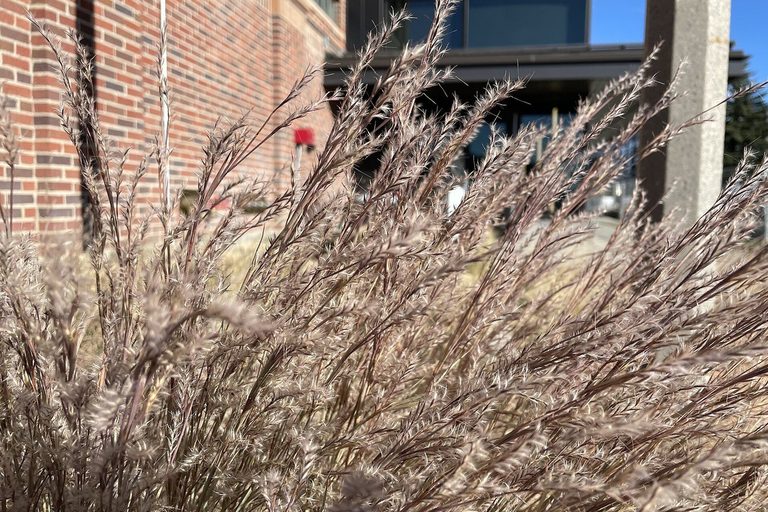
Which shrubs, ornamental grasses and lawn grasses actually survive road salt along curbs and driveways, which to avoid, and how to plant them.
Thin-barked young trees crack on sunny winter days, and rabbits and voles girdle them under the snow. Which trees need protection, what to use, when to put it on, and when to take it off.
Jack · golf course superintendent·4 min read·October 3, 2026
Two things kill young trees over a northern winter that most people never see coming: the sun, and rabbits. Both do their damage in January and February, and by the time you notice in spring, the tree may already be done. A few dollars of protection in the fall takes care of both.
On a clear winter afternoon, the sun hits the south and southwest side of a young tree's trunk and warms the bark well above the air temperature. The tissue under the bark thaws and starts to wake up. Then the sun drops behind the houses and the temperature crashes. That tissue freezes fast and dies.
The result is a long, sunken crack or a dead strip of bark on the southwest side, often called southwest injury. Insects and decay get into it, and a young tree can struggle for years or die.
Trees most at risk are young, thin-barked ones, especially in their first few winters after planting:
Older trees with thick, rough bark rarely get it.
Rabbits chew bark when other food is scarce, usually at snow height and a foot or two above it. Voles tunnel under the snow and chew the bark right at the ground line. If they chew all the way around the trunk (girdling), the tree can't move water and sugars between roots and leaves, and it dies.
You'll often find this in spring, when the snow melts and reveals a ring of chewed bark.
For sunscald:
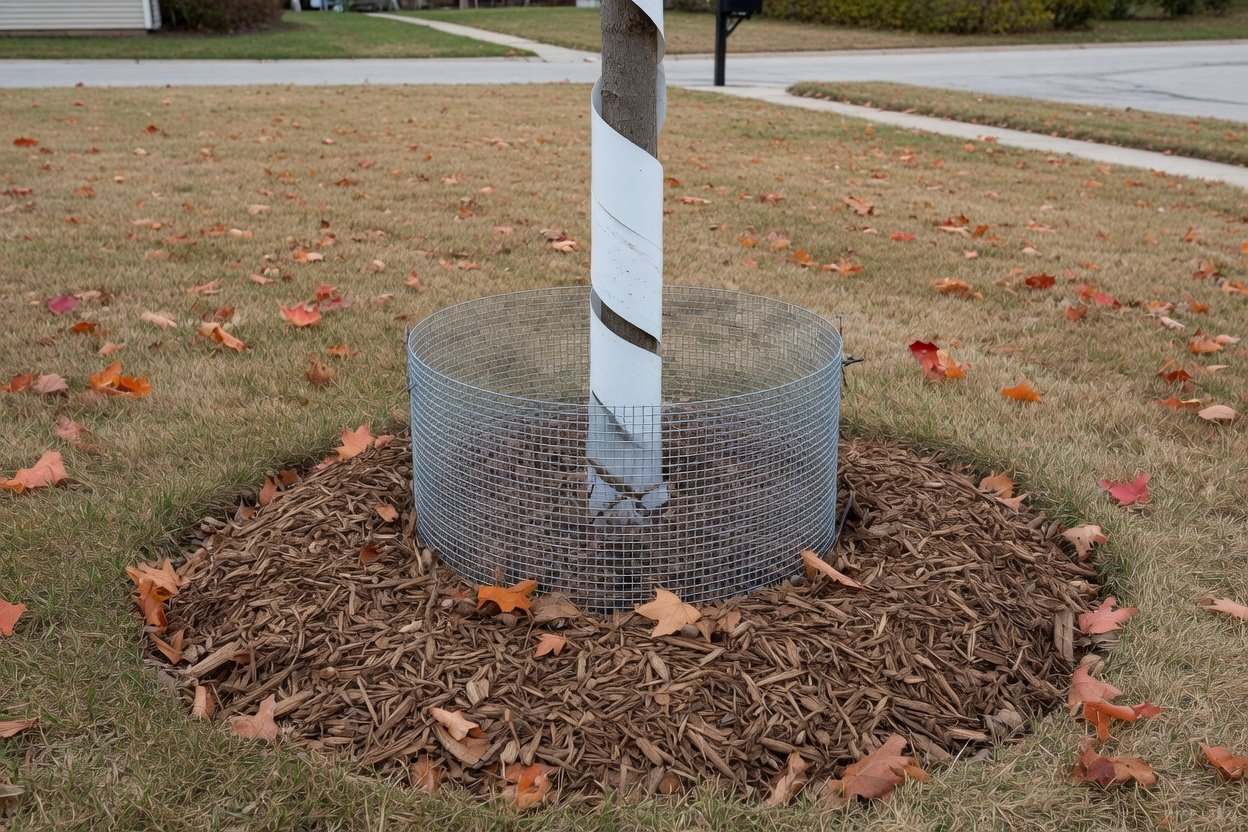
For rodents:
Many people use both: a spiral guard for the trunk and a hardware-cloth collar at the base.
Hardware cloth can stay on year-round if it's loose and you check it every year so it doesn't cut into the trunk.
If you have a tree that's been wrapped for years, pull the wrap off and look. I've seen plenty of trees with old wrap or a nursery tag wire cutting into the bark. Remove anything tight.
Protect a young tree for its first five or so winters, and it'll outgrow the need on its own.
Which shrubs, ornamental grasses and lawn grasses actually survive road salt along curbs and driveways, which to avoid, and how to plant them.
How to decide whether to treat or remove your ash tree for emerald ash borer: the canopy rule, size limits, timing, and what each choice costs.
Heavy wet snow splits arborvitae and flattens yews. How to tie them up before winter, how to clear snow safely, why you should never whack an iced branch, and how to fix…