Soil & Feeding
Fall Soil Testing: Why Now Beats Spring
A soil test is the cheapest way to stop guessing on lime and fertilizer. Why fall is the best time to test, how to take a good sample, and what to do…
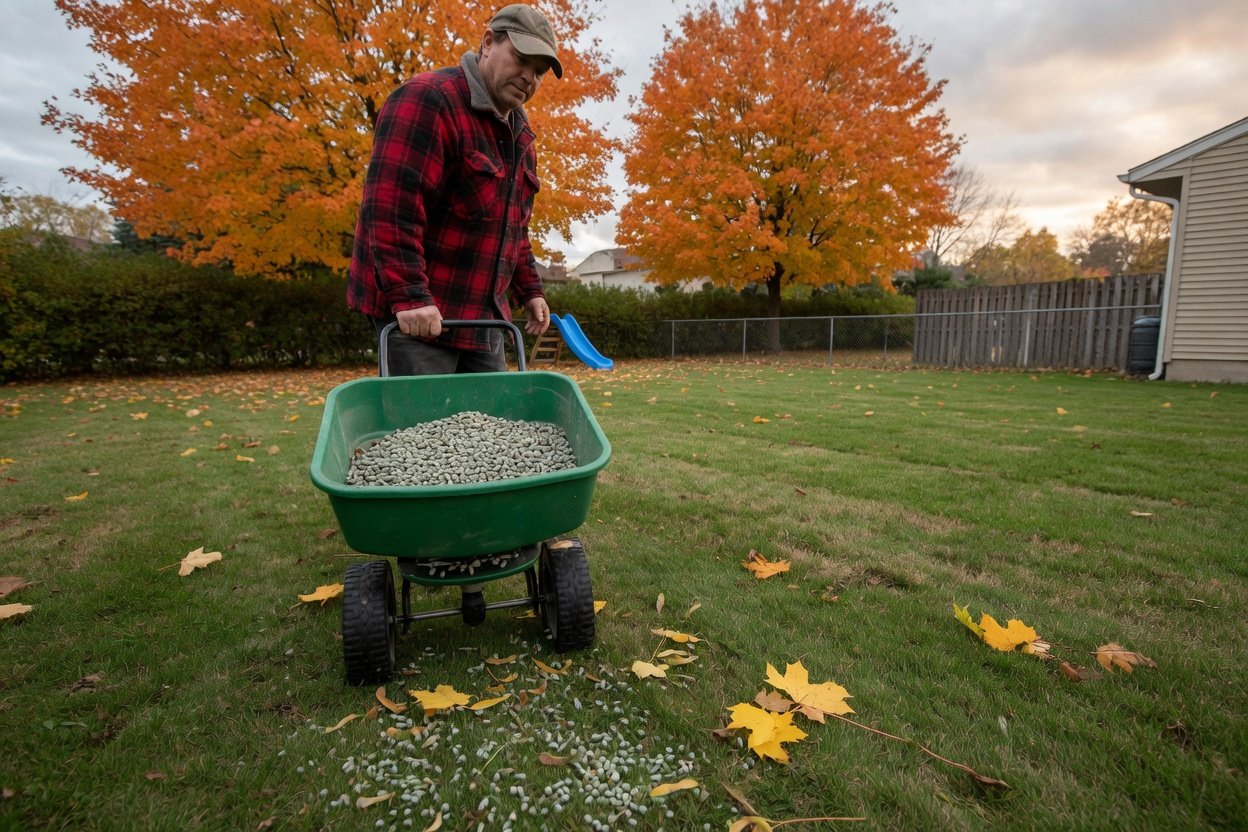
Lime fixes acid soil. It doesn't fix every thin lawn. How to tell if your lawn needs it, calcitic vs. dolomitic, how much to put down at once, and why fall is the time to do it.
Jack · golf course superintendent·4 min read·October 3, 2026
Every fall the garden centers stack bags of lime by the door, and every fall a lot of homeowners buy a few bags because their neighbor does. On the golf course we never put down a pound of lime without a soil test in hand. Lime is a fix for one specific problem: soil that's too acidic. If your soil isn't acidic, lime does nothing for the grass, and in some soils it makes things worse.
Lime is ground limestone. It raises soil pH, which is a measure of how acidic or alkaline the soil is. Cool-season grasses like Kentucky bluegrass, tall fescue, and perennial ryegrass grow best with a pH of roughly 6.0 to 7.0. Below about 6.0, nutrients like phosphorus get locked up, fertilizer works less well, and moss and some weeds gain ground on the grass.
Lime doesn't feed the grass and it doesn't green it up. It changes the soil chemistry so the fertilizer you already apply can do its job.
This is the whole game. Soils vary a lot across the northern states:
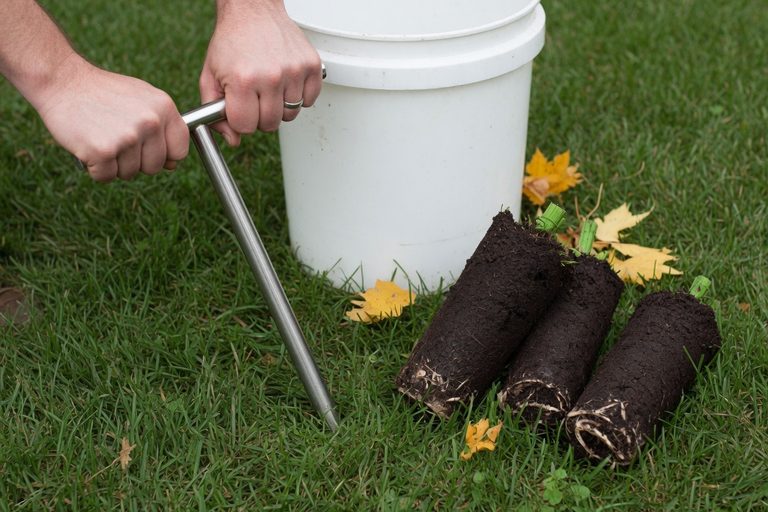
A soil test from your state's extension lab costs a little and tells you the pH and, just as important, the buffer pH, which is what the lab uses to calculate how much lime it takes to move your soil. Fall is a great time to sample; see fall soil testing and how to read the report.
If the report doesn't recommend lime, don't buy lime.
Your soil test settles this, too. If magnesium is low, dolomitic makes sense. If magnesium is already high (common in some clay soils), stick with calcitic.
Pulverized lime is a fine powder: cheap, effective, and messy. Pelletized lime is the same powder pressed into pellets that break down with rain and go through a normal lawn spreader without a cloud of dust. For a home lawn, pelletized is worth the extra cost.
Your test gives a total amount, usually in pounds per 1,000 square feet. On an established lawn, extension services generally advise putting down no more than about 50 pounds per 1,000 square feet in one application. If the test calls for more, split it: half this fall, half next spring, or spread it over a couple of years. Lime works slowly, mostly in the top inch or two of soil, and large single doses can burn turf or sit on the surface.
Set the spreader by the bag's directions, go over the lawn in two passes at right angles to each other at half the rate, and you'll avoid stripes.
Lime can go down any time the ground isn't frozen, but a fall application is ready to work when the grass wakes up in spring.
If your soil pH is already fine, lime won't fix a thin lawn. The usual culprits are shade, compaction, poor drainage, the wrong grass for the spot, or mowing too short. Moss in particular is often blamed on acid soil when the real cause is shade and wet ground; lime alone rarely gets rid of it.
Lime lasts, so you don't need it every year. Re-test every two to three years and only lime again when the numbers say so. The most common mistake I see is someone liming the same lawn every fall for a decade until the pH is too high, and then wondering why iron and manganese deficiencies show up as yellow grass.
Pair your lime with the right late-fall fertilizer application and the lawn heads into winter in the best shape it can be.
A soil test is the cheapest way to stop guessing on lime and fertilizer. Why fall is the best time to test, how to take a good sample, and what to do…
pH affects every nutrient your grass can or cannot access. Many northern soils run acidic, so lime is often needed (some, especially in the Plains and mountain West, run alkaline, so test…
Most homeowners fertilize blind. A professional soil test from a lab like the University of Illinois or a private service removes the guesswork and saves money while protecting the environment. Follow the…