Mowers & Equipment
Are Robot Mowers Good Enough Yet? A Golf Course Superintendent Judges the Cut
A golf course superintendent's verdict on robot mowers: why the cut beats rotary mowers, where they fall short, costs, and who should buy one.
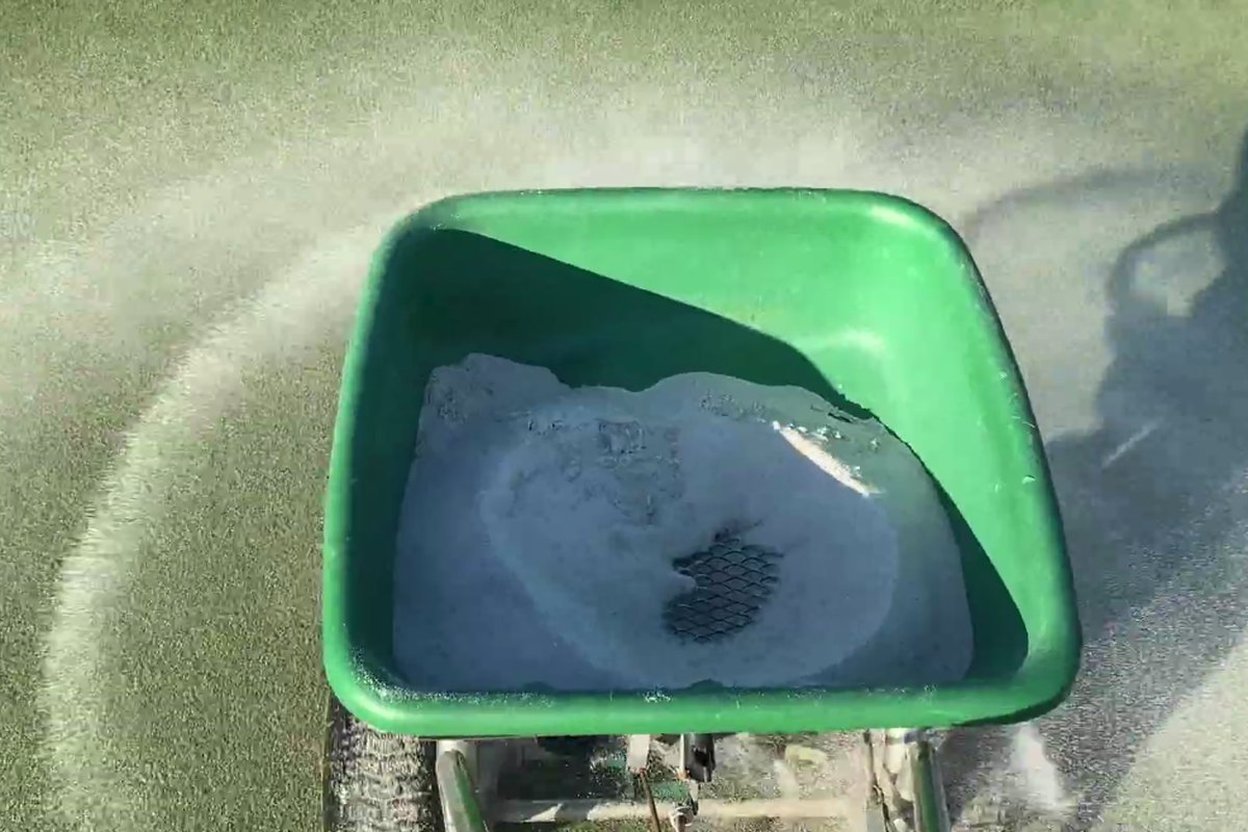
Fertilizer left in a spreader eats the metal and jams the gate. Five minutes of cleaning in the fall keeps it working and spreading evenly next spring.
Jack · golf course superintendent·2 min read·October 6, 2026
The broadcast spreader goes in the corner of the garage after the last fertilizer application and gets forgotten until spring. Then the gate is stuck, the wheel won't turn, and the first spread of the year comes out in stripes.
Fertilizer is salt. Left in a spreader, it pulls in moisture, cakes up, and eats metal parts. Five minutes now saves a broken spreader in March.
Pour any leftover product back into the bag and seal it. Tip the spreader over a tarp to get the last bits out. Don't leave "just a little" in the hopper.
Once it's dry, put a few drops of light oil on the wheel bearings, the gear box (if it has a fill point), and the gate pivot. Spray a light coat of a rust inhibitor on metal parts. Work the gate a few times so everything moves freely.
Order parts now. They're easier to find in fall than in April.
Hang it or keep it off a damp concrete floor. Leave the gate slightly open so it doesn't seize in the closed position.
Before the first application next year, check your spreader setting on a driveway with a measured amount of product. An even spread starts with a clean spreader.
On the golf course, every spreader was washed after every use, without exception. At home, once at the end of the season is the minimum. See also mower winter storage.
A golf course superintendent's verdict on robot mowers: why the cut beats rotary mowers, where they fall short, costs, and who should buy one.
A small lawn under 5,000 square feet needs a basic mower, not a $6,000 one. Learn the cut height, blade, and upkeep that actually matter.
Battery or gas mower in snow country: how cold affects each one, the right fall mowing height, and how to store each over winter.