Mowers & Equipment
The $6,000 Mower Question: What a Small Yard Actually Needs
A small lawn under 5,000 square feet needs a basic mower, not a $6,000 one. Learn the cut height, blade, and upkeep that actually matter.
A golf course superintendent's verdict on robot mowers: why the cut beats rotary mowers, where they fall short, costs, and who should buy one.
Jack · golf course superintendent·10 min read·October 19, 2026
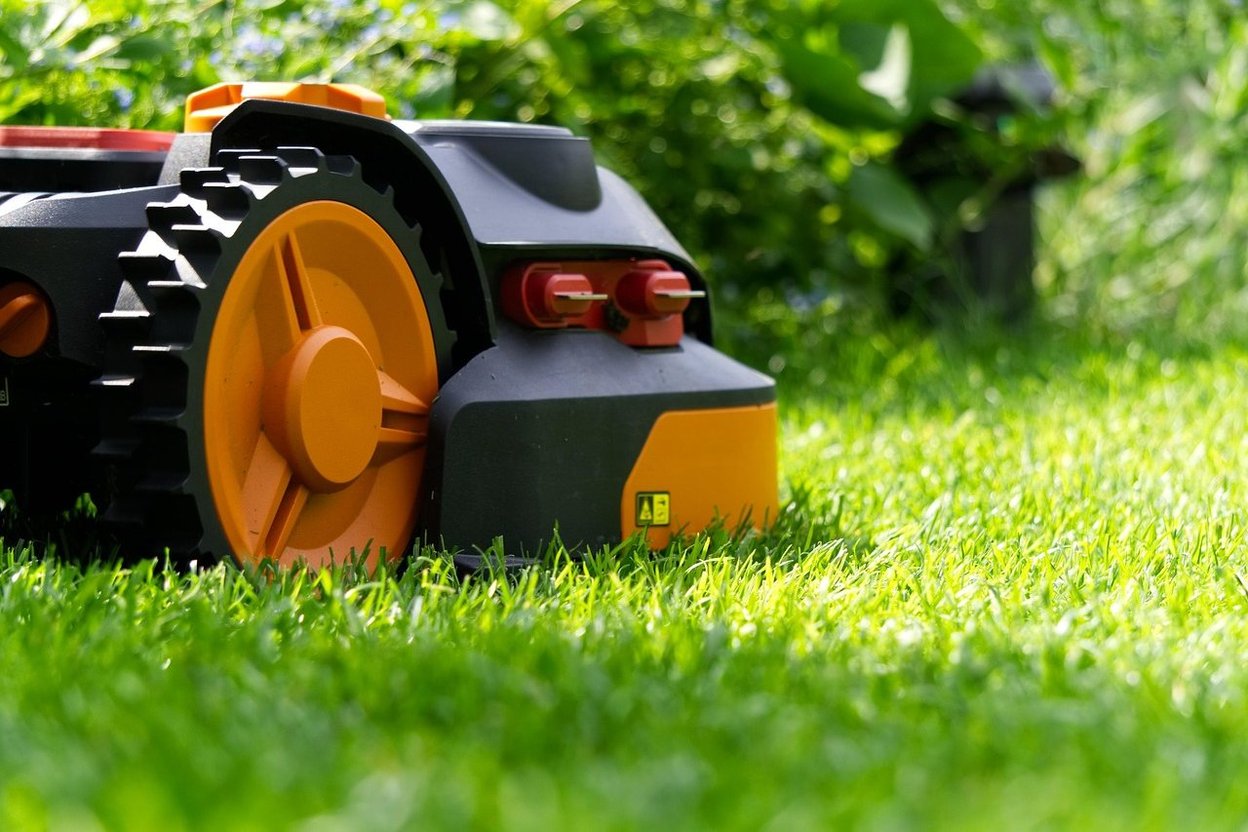
It's a Saturday in October and you're pushing the mower across the lawn again, wet leaves sticking to the deck. Next door, a little robot hums along by itself while your neighbor rakes out the flower beds. You start doing the math on whether you should get one. My answer, judging it the way I'd judge a fairway, is not quite yet. The blades on these machines cut the grass well. The machine around the blades still misses grass, leaves the edges uncut and costs a lot. It's close, though, and here's where it stands.
I'm judging cut quality from university extension research and published tests. I haven't tested every model myself. I've been watching robot mowers closely, and the good ones can handle a quarter acre now. Coverage isn't the problem anymore.
On a golf course, a good cut means more than a clean leaf tip. Every blade of grass should be cut, the height should be the same from one side to the other, and nothing should be left standing along the edges. On the first point, a robot mower's small razor blades often cut cleaner than the average homeowner's rotary mower with a blade nobody has sharpened since spring. On the other points the machines still fall short. They miss patches. They leave a strip uncut along every wall, fence and bed. Some lose their GPS signal or get stuck partway through the job.
So I'd say the cut quality isn't up to my standard yet. Once it is, I think it's exactly what a neighborhood needs. You set it up, it mows the grass on its own, and you spend your weekends on the beds, the trees and the parts of the yard you actually enjoy. That's how a golf course runs. The crew sets things up to stay nice with little attention so the people can put their time where it counts.
Below I'll go through why the cut itself is good, where the machines fall short, what they cost, and who should buy one this year.
A standard rotary mower uses one heavy blade spinning fast, and it works more like a machete than scissors. When that blade is even a little dull, it tears the leaf tip. The torn end dries out and turns tan, which is why some lawns look slightly gray a day after mowing. Most robot mowers use several small, thin pivoting blades that slice the leaf, which is closer to how a reel mower cuts.
The research supports this. In a University of Kentucky trial on tall fescue cut at 3 inches, the researchers ran three six-week experiments. The robotic mowers produced about 48% better leaf cut quality and about 51% less yellowing at the leaf tips than rotary mowers. The test was fair to the rotary mowers, too. The researchers put new blades on the robots and sharpened the rotary blades at the start of each experiment. They credited the result to the razor blades. That finding comes from a write-up in Golf Course Management, a trade magazine, rather than a peer-reviewed journal, so take it as a strong early result and not the last word.
At UConn, preliminary research found that tall fescue and Kentucky bluegrass looked best at 2.25 inches when the researchers compared mowing heights of 1.25, 2.25 and 3.25 inches. They also found that a May fertilizer application kept working into July or August under robot mowing but not under weekly conventional mowing. Husqvarna loaned the mowers for that study, and the work is still early, so keep that in mind.
Clint Waltz, a turfgrass specialist with UGA Extension, explains why it works. The mower takes off very little leaf each time it passes, so the plant is under less stress. He says their research showed better rooting and a denser canopy.
This connects to the one-third rule, the oldest rule in mowing. Purdue Extension puts it plainly: mow often enough that you never remove more than one-third of the leaf blade in one cut. If you cut off more than that, the plant has to stop building roots and regrow leaf instead. Most homeowners break this rule every time they skip a weekend in May. A robot that runs every day takes off a sliver each time, so it can't break the rule. The clippings are tiny, too. Penn State notes that clippings are mostly leaf tissue that breaks down quickly and doesn't cause thatch, so you can leave them on the lawn.
The blade works. The trouble is getting that blade over every square inch of the lawn, every time.
The most thorough recent test I know of was published in June 2026 by one reviewer who ran 13 robot mowers for about four months, with timed runs on a 0.1-acre yard. Keep two limits in mind. It's one reviewer on one yard, and the grass was a warm-season southern turf, not bluegrass or fescue. Still, the problems it found have nothing to do with grass type:
One point matters for northern lawns in particular. The same test said the Yarbo's straight blades smash and rip grass, and that Yarbo recommends them only for cool-season grasses. A tougher grass can hide a rougher cut, but that doesn't make it a good cut.
UGA's Waltz is clear that owners still have to trim by hand around driveways and edge around beds, shrubs and trees. Wet grass and clutter on the lawn add to the trouble. In my opinion, a mower that runs every day will run into dew, fallen sticks and kids' toys more often than you would on a Saturday.
The prices below are 2026 US list prices from that review and from retail listings, so expect them to change with sales:
Plan on spending somewhere between about $1,100 and $3,000 for a real yard. Most of these models navigate by GPS or cameras and don't need a boundary wire.
To size one, start with your lawn's area and slope. Husqvarna lists capacity for each model: the 410 iQ covers 0.5 acre, the 420 iQ 1 acre, the 440 iQ 2 acres and the 435 iQ AWD 1.3 acres. The 435 iQ AWD is the only one they rate for slopes, up to 70%. Husqvarna says those ratings can vary by plus or minus 20%. In the 2026 test, the WORX Landroid, rated for 1 acre, used about 177% of a full battery to mow 0.1 acre. Treat the rated size as the most the mower can handle, not what it will comfortably cover. Buy for more lawn than you have, and if your yard is hilly, buy a mower that's actually rated for slopes.
In cool-season country, height matters more than anything else in the setup. Set the robot between 2.25 and 3 inches. UConn's best results were at 2.25 inches, and Purdue recommends 3 inches or higher for cool-season lawns, which I'd lean toward in summer heat. Leave the clippings on the lawn, since mulching is the whole idea.
Keep the blades sharp. The razor blades are the reason to own one of these, and a dull razor tears grass just like a dull rotary blade. Check them often during the season and replace them when the leaf tips start looking ragged.
Right now is the season to watch closely. I'd say fall leaves are where a robot mower struggles most. A daily mulching pass can handle a light scatter. A thick layer of wet maple leaves will bury it, and under that layer the grass goes without light just as it's storing energy for winter. My take is to rake or blow the heavy drops yourself and let the robot handle the light ones. Bring it in before snow, because these machines aren't made for snow.
Husqvarna's winter guide is a good checklist for any brand. Before winter, leave the grass at about 2.4 to 3.1 inches. To store the mower, charge it fully and switch it off. Clean the body, chassis and blade disc, and put on new blades and screws. Then store the mower, charging station and power supply indoors, somewhere dry and above freezing. If you get it put away before Thanksgiving, you won't be digging it out of a snowbank.
A good fit: a flat, open lawn with simple shapes, few trees, no steep banks, and an owner who would rather spend weekends on the beds than behind a mower. If you buy one for that kind of yard, the daily light cut will probably leave your grass healthier than you could manage on your own.
Not a good fit yet: yards with many separate sections, steep slopes, lots of trees and roots, tight beds, play equipment, or spotty GPS signal under heavy tree cover. Those are the yards where the 2026 test machines got stuck, wandered or left grass standing.
Either way, plan to trim the edges by hand. Use the course trick to cut that job down. Put mowing strips or mulch edges along fences and beds so there's less grass the robot can't reach. Make the yard easy to keep up, and the robot can handle most of the mowing.
Photo by distelAPPArath on Pixabay.
A small lawn under 5,000 square feet needs a basic mower, not a $6,000 one. Learn the cut height, blade, and upkeep that actually matter.
Battery or gas mower in snow country: how cold affects each one, the right fall mowing height, and how to store each over winter.
Battery, gas or backpack: how to size a leaf blower to your yard, which specs count, what the noise does to your ears, and where gas blowers are banned.