Garden Beds
Getting Roses Through a Northern Winter: Sort Them, Wait, Then Cover
Hardy shrub roses can stay uncovered. Tender hybrid teas need mounding or tipping, but only after they go fully dormant. Here's how to time it.
Learn why winter mulch waits until the soil freezes, plus depth, materials, and when to pull it back in spring.
Jack · golf course superintendent·8 min read·October 22, 2026
It's a warm Saturday in late October. You're cutting back the perennial bed, the bagged mulch is sitting in the garage, and it seems smart to spread it now and be done for the year. Don't. Winter mulch goes on after your plants are dormant and the top of the soil has started to freeze. In much of the Midwest that falls around Thanksgiving. Mulch spread on a nice fall afternoon often causes more trouble than it prevents. Here's when to put it on, how deep to go, what material to use, and when to pull it back in spring.
The extension services agree on this. Oregon State says it's best to apply mulch after the ground has frozen lightly. Iowa State says to put about 4 inches over the crown after the ground freezes, which is usually by late November in much of Iowa, and it adds, "Do not place the mulch on too early." UW-Madison Extension says "Usually Thanksgiving is proper timing," depending on where you live and how November goes. It says to mulch once the soil is just starting to freeze and the plants are fully dormant. Purdue says to wait until plants are completely dormant and temperatures stay below freezing.
This year Thanksgiving is November 26, which is a fair target for a lot of the Midwest. Still, the soil tells you when, not the calendar. When a trowel hits a crust of frozen ground in the morning and the perennials have browned off, it's time.
Warm fall days are not your cue. Halloween is too early almost everywhere this site covers. A mild spell in early November tells you to wait, not to hurry.
On a golf course, timing decides whether a job gets done once or twice. Mulch put down at the right time does its job all winter. Mulch put down early adds problems you'll be fixing in April.
Most people think winter mulch is a blanket that keeps plants warm. It isn't, and once you understand that, the timing makes sense.
UW-Madison Extension says winter mulch doesn't keep the ground from freezing. It stops the repeated freeze-thaw cycles that snow cover would normally prevent from December through March. Purdue says the main benefit of winter cover is protection from wide swings in soil temperature, and that the goal is to keep plants dormant, not warm.
The damage comes from the swings. Oregon State says constant freezing and thawing can damage root tissue and kill roots. Each cycle swells and shrinks the soil, and that can slowly push a plant's crown up out of the ground. This is called frost heave. By March you find the plant sitting on top of the bed with bare roots drying in the wind.
Snow does this job well when it stays on the ground, but a lot of northern winters bring a thaw in January, rain in February, and bare ground in between. Mulch puts a steady layer over frozen soil and keeps it frozen. That's also why it has to go on after the freeze. If you mulch warm soil, you hold the warmth in.
If you spread the mulch during fall cleanup, three things can go wrong.
First, it can smother plants and invite disease. Purdue warns about both. A crown that's still green and growing doesn't do well under a damp layer of straw during mild, wet weeks.
Second, it can slow dormancy. Iowa State says mulching too early can delay dormancy and leave plants more open to cold injury. You want plants to feel fall arrive and shut down on schedule. Keeping their roots warm sends the wrong signal.
Third, voles. UW-Madison advises clearing vegetation from the base of small trees so the area is less inviting to voles. Thick, loose cover laid down while the ground is soft and food is still around works the same way: it gives them a sheltered place to settle in near your plants. If you wait until the ground is frozen, many of them will already have settled somewhere else.
Depth recommendations vary a little, but they cluster around the same range:
Best materials: UW-Madison ranks straw and marsh hay first, then evergreen boughs. Purdue lists straw, pine needles, hay and bark chips. These all stay loose and let air move through, which keeps the crown from sitting in wet, packed material. Here's an easy budget move: after the holidays, cut up the Christmas tree and lay the boughs over the bed.
Worst material: whole leaves. UW-Madison says they mat down and can smother plants. I know they're free and there's a pile of them, but a wet mat of maple leaves over a crown is asking for rot. Shred them and use them somewhere else.
Trees and shrubs: this is different from winter mulch over a bed. Keep it to a year-round layer 1 to 3 inches deep. University of Maryland Extension says to pull it back about 3 inches from the trunk and that "Mulch should never touch the trunk." Illinois Extension says to keep it at least 4 inches away. I'd go with the wider gap. Mulch piled against the bark like a volcano holds moisture right where the tree is weakest. For young trees, UW-Madison recommends a hardware-cloth cylinder pushed into the soil around the trunk to keep rodents off.
Don't mulch every bed out of habit. Put your mulch where it does some good.
Mulch these first: - Strawberries. Purdue says heaving does the most damage to shallow-rooted plants like strawberries. - New and late plantings. Anything you planted this fall has a small root system that hasn't anchored yet. Iowa State says tender and late-planted perennials should get protection late in the fall. - Tender perennials that are borderline hardy in your zone.
Skip these: Oregon State lists a long set of perennials that do better with no winter mulch. They don't tolerate wet soil and are prone to root rot or rotting out in the center. The list includes hens and chicks, stonecrop, thyme, lamb's ear, Russian sage, dianthus, creeping phlox, yarrow, purple coneflower, salvia and most ornamental grasses. If a plant likes dry, lean soil in summer, it probably doesn't want a wet blanket in winter.
The mulch has to come off on time too. Iowa State says to remove the extra mulch in early spring as soon as the top layer thaws, which is usually around mid-March in much of Iowa. If you leave it on too long, the crowns sit wet and dark while they're trying to wake up, and that's how crown rot starts. Pull it back gradually. Rake it off the crowns first and keep some nearby in case a hard cold snap comes. Once the danger has passed, clear it off completely.
Here's a simple calendar you can follow:
That's one job in late November and one in March. With two well-timed trips to the beds, your perennials make it through the winter.
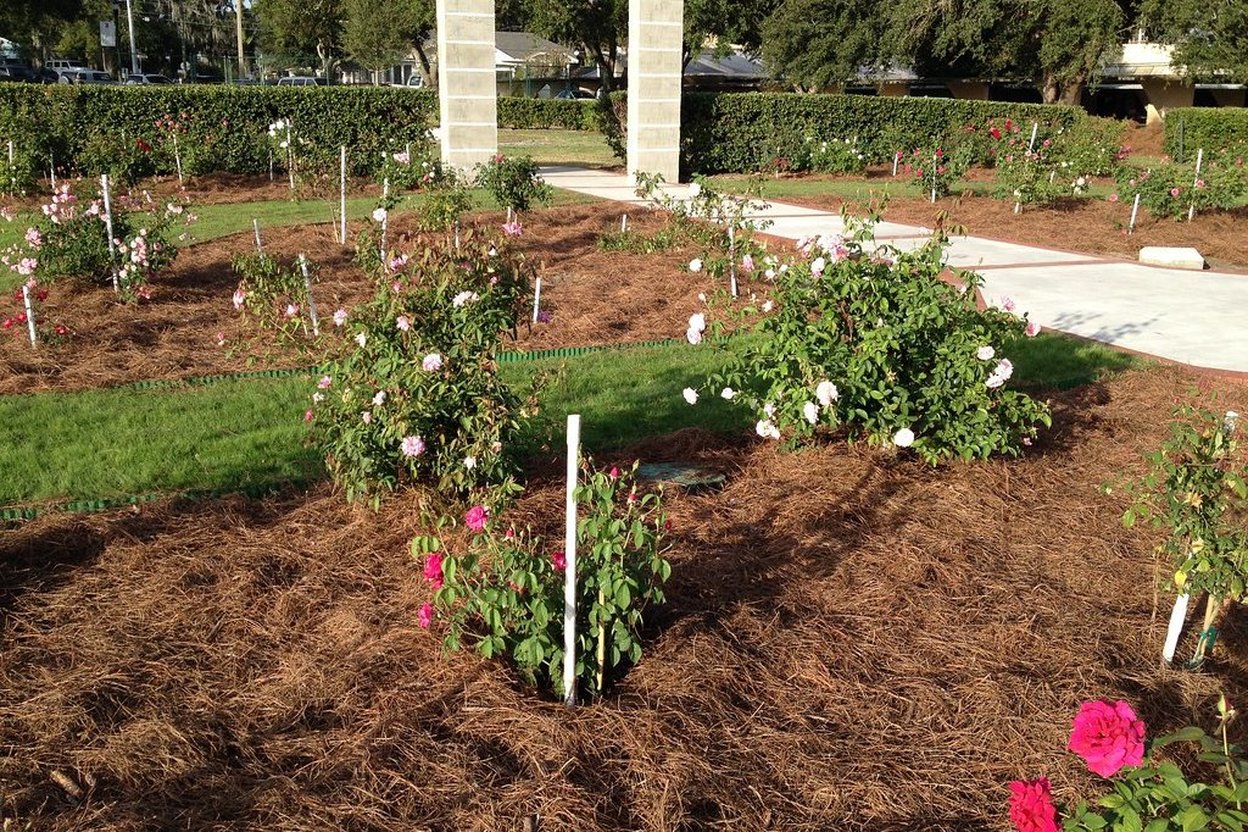
Photo: New Pine Straw Mulch by mmmavocado, BY 2.0.
Hardy shrub roses can stay uncovered. Tender hybrid teas need mounding or tipping, but only after they go fully dormant. Here's how to time it.
Most hydrangeas should not be pruned in fall. Learn how to identify your type, what's safe to cut now, and how to protect buds through winter.
Fallen leaves make free mulch once shredded. Learn the right depth, when to wait for hard freezes, and which leaves to keep out of your beds.