Garden Beds
Getting Roses Through a Northern Winter: Sort Them, Wait, Then Cover
Hardy shrub roses can stay uncovered. Tender hybrid teas need mounding or tipping, but only after they go fully dormant. Here's how to time it.
Fallen leaves make free mulch once shredded. Learn the right depth, when to wait for hard freezes, and which leaves to keep out of your beds.
Jack · golf course superintendent·10 min read·October 23, 2026
It's mid-October. The maples are letting go, the beds along the house are filling up, and you're looking at the rake and the stack of paper yard bags and asking yourself why you do this every year. Mostly, you don't need to. Fallen leaves are about the best free mulch and soil builder you'll ever get. Whole leaves dumped in a bed are the trouble, because they mat into a wet blanket. Shred them, keep the layer to the right depth, and watch for a few exceptions, and the chore turns into a benefit.
A tree drops a season's worth of organic matter right at your feet. Hauling it to the curb in October and then buying bagged mulch in April means paying twice for the same thing.
The catch is the shape of the leaf. A whole maple or oak leaf is a flat sheet. Pile up a few hundred of them, add some fall rain, and they press into a layer that sheds water like shingles. The Chicago Botanic Garden warns that whole, unshredded leaves can keep water from reaching the roots. Purdue Extension says shredding is what keeps leaves from matting down when wet and smothering plants. Colorado State Extension says it flatly: leaves for mulch need to be shredded, "not left whole."
On a golf course we treat organic debris the same way. Leaves stay where they help, they get chopped, and nobody spends a crew-week blowing every last one off the property. The idea is to set things up so the debris does useful work and you don't have to keep fighting it. Your beds work the same way.
So the real question is how to use leaves without making the problems that leaves can cause, not whether to use them at all. That comes down to three things: shredding, depth and timing.
Shred them. The easiest tool is the one you already own. Run a mulching mower over the leaves on the lawn or driveway, bag them, and dump the bags into the beds. Two passes will chop them finer than one. If you only have a small pile, the Chicago Botanic Garden suggests putting the leaves in a garbage can and shredding them with a string trimmer. Wear safety goggles, because that can throws debris everywhere. Shredded leaves let water and air through, stay where you put them, and break down faster.
Get the depth right. How much depends on what the leaves are for:
Wait for cold ground. This is the step most people get wrong. Winter mulch is there to keep the soil cold, so it doesn't freeze and thaw over and over and heave plants out of the ground. It's not there to keep the soil warm. Purdue says to wait until the ground is cold and the plants are dormant, usually after several hard freezes. Across much of the northern US that falls sometime between Thanksgiving and Christmas. The Chicago Botanic Garden says to wait until temperatures stay below freezing, because mulch put down too early holds warmth in the soil. Until then, shred the leaves and keep them in bags or a pile.
Keep leaves off crowns and bark. Pull the mulch back a few inches from shrub stems, tree trunks and perennial crowns. The Chicago Botanic Garden says leaf mulch against bark and stems invites disease and gives rodents a place to burrow right next to the trunk.
Leaves aren't right for every bed. Here are the cases where they cause trouble:
There's another reason not to bag every leaf, and it's alive. Leaf litter is winter housing for a lot of insects. Texas A&M AgriLife Extension says ground-nesting bees and wasps depend on leaf litter and loose soil to get through winter. Insects that overwinter as eggs, larvae or pupae come out in spring as an established population that helps with pollination and pest control. The Xerces Society, a conservation group for insects and other invertebrates, recommends leaving leaf litter in place over winter. It points out that some butterflies spend the winter there and that stick insect eggs wait in the litter until spring. Fireflies are part of this too. University of Wisconsin Extension says firefly larvae overwinter in the soil and come out at night to hunt on the soil surface and under vegetation. Bare, raked ground doesn't help them.
None of this means you have to give up a tidy place. The middle path looks like this:
It's the same thinking as a course's out-of-play areas. Not every acre needs to look like a green.
The beds won't take everything a big tree drops. The extra has three good places to go.
Mow it into the lawn. Colorado State says to set the mower deck to its highest setting, take off the bagger, and make at least two passes. If you can still see grass through the chopped leaves, the layer is thin enough to leave. If you can't, bag the extra for the beds or the compost. Colorado State also cites research on this. Purdue found that mulching leaves into turf at high rates had no effect on turf quality, color, soil pH or thatch, and that it raised soil organic matter. Colorado State also reports a Michigan State study in which lawns that got mulched leaves had fewer dandelions and less crabgrass after three years. Purdue suggests about 1 pound of nitrogen per 1,000 square feet in fall to help the chopped leaves break down. That fits nicely with the late-season feeding a cool-season lawn should be getting anyway.
Work it into the vegetable garden. Vegetable and annual beds are the exception to the "mulch on top" rule. Purdue says shredded leaves left on top over winter can keep the soil too cold and wet to work in spring, so till them in during fall. Colorado State suggests 6 to 8 inches of leaves a year for vegetable or annual gardens, shredded if possible, and recommends a soil test first so you don't over-amend.
Compost the rest. Leaves are high in carbon, so they need nitrogen to break down. Colorado State says to mix them with high-nitrogen materials. Purdue suggests green trimmings or grass clippings, or a fertilizer or manure if you don't have those. A pile of shredded leaves started now becomes next year's mulch.
Now through early November - Mow leaves into the lawn as long as grass shows through after two passes. - Shred the extra with the mower and bag it or pile it near the beds. - Bag diseased leaves and walnut leaves separately for a hot compost pile or disposal. - Till shredded leaves into the vegetable garden. - Set aside a spot of whole leaves for overwintering insects.
After several hard freezes (roughly Thanksgiving to Christmas) - Spread 2 to 4 inches of shredded leaves in general beds. - Put 3 to 6 inches over tender perennials, or fill wire or burlap cages around tender shrubs. - Pull the mulch back from crowns, stems and trunks. Go thin wherever voles have been a problem.
Spring - When new growth starts, remove the cages and the leaves inside them, as Colorado State advises. - Pull leaves back off perennial crowns and bulbs as they come up. Leave the rest of the layer to keep breaking down. - Spread last fall's composted leaves as fresh mulch.
That's one weekend of shredding in fall, one afternoon of spreading after the freezes, and a little tidying in spring. It's a lot less work than raking every leaf to the curb, and the beds come out better for it.
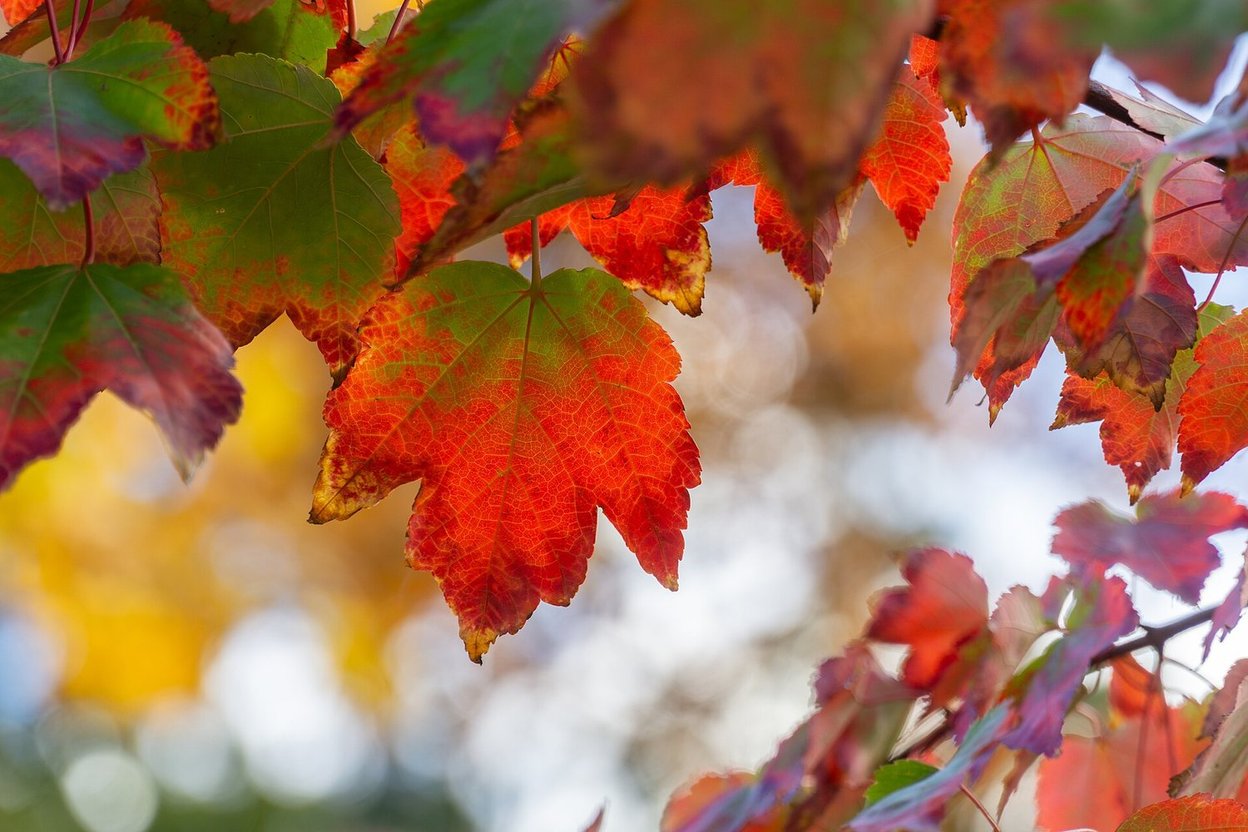
Photo: Autumn Leaves - Caversham Court - Reading by Sumitsurai, CC BY-SA 4.0.
Hardy shrub roses can stay uncovered. Tender hybrid teas need mounding or tipping, but only after they go fully dormant. Here's how to time it.
Most hydrangeas should not be pruned in fall. Learn how to identify your type, what's safe to cut now, and how to protect buds through winter.
Learn why winter mulch waits until the soil freezes, plus depth, materials, and when to pull it back in spring.