Garden Beds
Getting Roses Through a Northern Winter: Sort Them, Wait, Then Cover
Hardy shrub roses can stay uncovered. Tender hybrid teas need mounding or tipping, but only after they go fully dormant. Here's how to time it.
Most hydrangeas should not be pruned in fall. Learn how to identify your type, what's safe to cut now, and how to protect buds through winter.
Jack · golf course superintendent·8 min read·October 24, 2026
You've raked the leaves, the mower is almost done for the year, and that hydrangea by the front steps looks ragged: brown flower heads, floppy stems, and leaves going yellow. You've got pruners in your hand and the urge to tidy it up before Halloween. For most hydrangeas in the northern US, don't do it. You can safely cut very little in fall. The useful work this time of year is figuring out which type you have, protecting the tender ones and saving the real pruning for spring.
Cutting hydrangeas in fall is the most common way people lose next year's flowers. Many homeowners prune in October to clean up, and then the plant comes up leafy and green in June with no blooms.
It comes down to timing. Bigleaf, oakleaf and mountain hydrangeas bloom on old wood, meaning stems that grew the year before. University of Minnesota Extension says bigleaf hydrangeas set next year's flower buds in August and September. By now those buds are already on the stems. If you cut the stems, you cut off next summer's flowers. UNH Extension says bigleaf hydrangeas should never be pruned in late summer or fall.
Panicle and smooth hydrangeas work differently. They bloom on new wood, the growth they put on next spring. A fall cut won't cost you flowers, and Minnesota Extension lists fall as an acceptable time to prune panicle types. Even so, they recommend waiting until late winter or spring, and so do I.
A golf course works the same way. The crew does the work when it pays off, not when the calendar makes them feel like doing something. On every hydrangea you own, fall pruning has a real downside and almost no upside.
Everything depends on the type, so start here. Illinois Extension sorts them into two groups.
Old wood (blooms on last year's stems; don't cut in fall):
New wood (blooms on this year's growth; can handle a cut, but it can wait):
The in-between: Endless Summer and other rebloomers. These are bigleaf hydrangeas bred to bloom on both old and new wood. Minnesota Extension says they bloom whether or not you prune. Clemson notes that the first flush of flowers still comes from old wood and the later flowers come on new wood. If you cut one back in fall, you lose the early show.
The rule for everyone else: if you can't tell what you have, don't cut it. Leaving it uncut costs you nothing. A wrong cut can cost you a whole summer of flowers.
The list is short. These are general good practice for any shrub, and they're safe on every hydrangea type:
On panicle and smooth types you have more freedom, but I'd still leave the flower heads on. Minnesota Extension recommends waiting until late winter or spring partly because the dried heads add winter interest. A panicle hydrangea with tan cones holding snow looks a lot better in January than a row of stubs. It also means one less job on your fall list.
Skip the hard cutback for now. It belongs in late winter or early spring, which I cover below. Fall is short enough already. Spend it on the lawn and leaves, and let the hydrangeas wait.
Bigleaf hydrangeas are where northern gardeners get burned. The flower buds sit on the stems all winter, and they're more tender than the plant. UNH Extension says extremely low temperatures, wide temperature swings and late spring frosts all damage bigleaf buds. A plant killed to the ground rarely blooms that season. The roots usually survive and the plant regrows, but it grows only leaves that year.
Here's what you can do once the plant has dropped its leaves and gone dormant, usually in the stretch between Halloween and Thanksgiving:
To be honest, UNH says this protection isn't always effective. You can do everything right and still lose the buds to a hard January or a frost in May. If a bigleaf has given you leaves and no flowers for several years running, the fix is usually the plant or the spot, not more burlap. Move it somewhere more sheltered, or replace it with a reblooming type or a panicle or smooth hydrangea. On a course, if a plant needs babysitting every winter just to survive, we swap it for one that suits the site. That's how you keep the beds looking good without spending every weekend on them, and it works at home too.
Spring pruning starts with patience. UNH Extension says to wait until mid to late spring to prune bigleaf hydrangeas, when you can actually see what made it through winter. Some stems that look dead in March will leaf out by May.
To check a stem, do a scratch test. Scrape a little bark off with your thumbnail or a knife. Bright green underneath means that part is alive. Tan or brown means that part is dead. If the tip is brown, move down the stem and test again, because often only the top few inches died. Cut back to just above live buds and leave everything that's alive.
After that, prune by type:
So if you want one rule to take into spring for bigleaf hydrangeas: cut only dead wood, wait until after bloom to shape the plant, and never take more than a third. For now, hang the pruners back up and go rake.
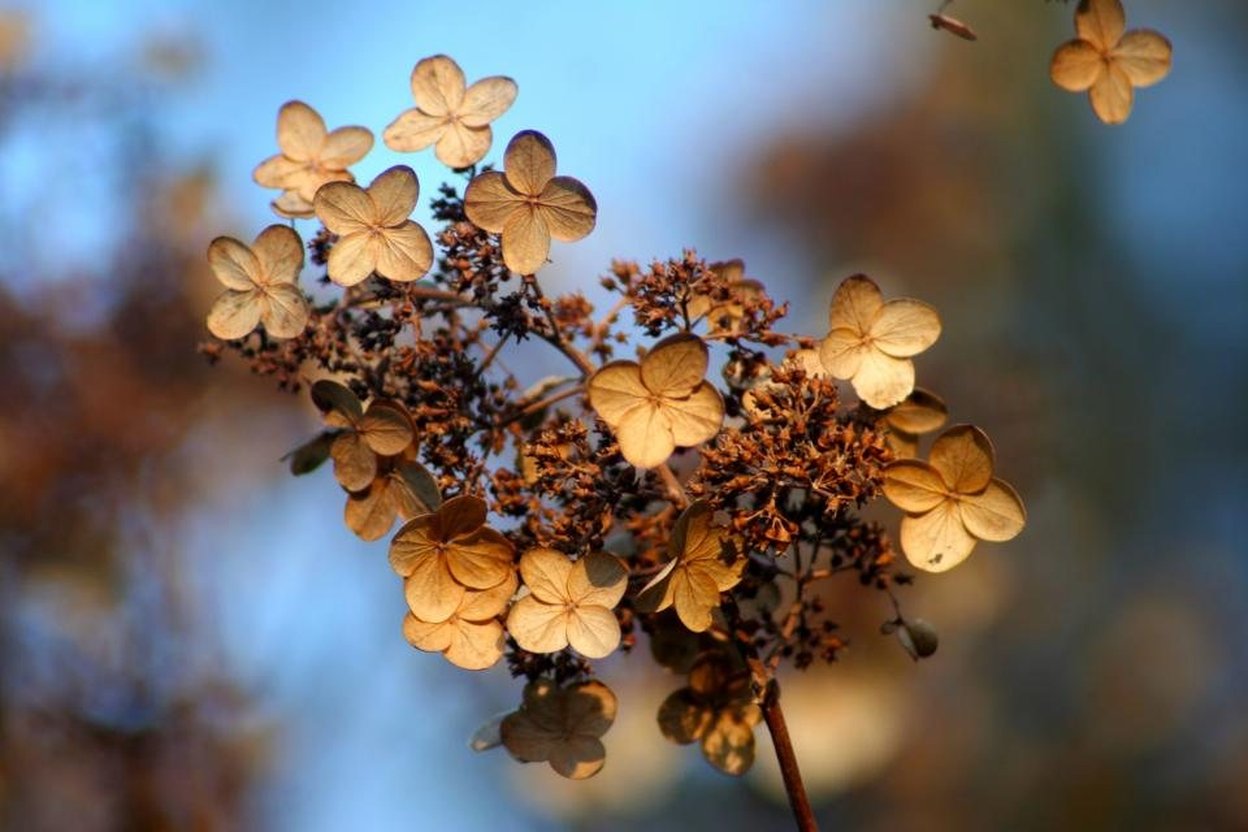
Photo: Hydrangea Autumn by Amber Ladley, CC0.
Hardy shrub roses can stay uncovered. Tender hybrid teas need mounding or tipping, but only after they go fully dormant. Here's how to time it.
Fallen leaves make free mulch once shredded. Learn the right depth, when to wait for hard freezes, and which leaves to keep out of your beds.
Learn why winter mulch waits until the soil freezes, plus depth, materials, and when to pull it back in spring.