Lawn
How to Fix Fertilizer Stripes in Your Lawn (and Never Get Them Again)
Tell dark-green overlap stripes from yellow burn stripes, fix each one, and calibrate your spreader and walking pattern so they don't come back.
Brown summer grass is usually dormant, not dead. Learn how to check the crowns, how long dormancy is safe, and what to do this fall.
Jack · golf course superintendent·9 min read·October 20, 2026
You looked out the window one day in late July and the lawn had gone the color of a paper grocery bag. Your neighbors were running sprinklers and you wondered if you'd just lost the whole yard. Most likely you didn't. A brown cool-season lawn in summer is usually dormant, not dead. The grass shut down its leaves to keep the plant alive. Now that it's October, here's how to tell which parts made it, how long grass can safely stay dormant, and what you can still do this fall.
Kentucky bluegrass and the other cool-season grasses have a built-in survival mode. When heat and drought set in, the plant lets its leaf blades go brown and stops growing. It keeps its moisture in the crown at the base of the plant, in the rhizomes and in the roots. University of Minnesota Extension says bluegrass can start browning after about 7 days without water, and that the browning is a survival response. The base and roots are still alive.
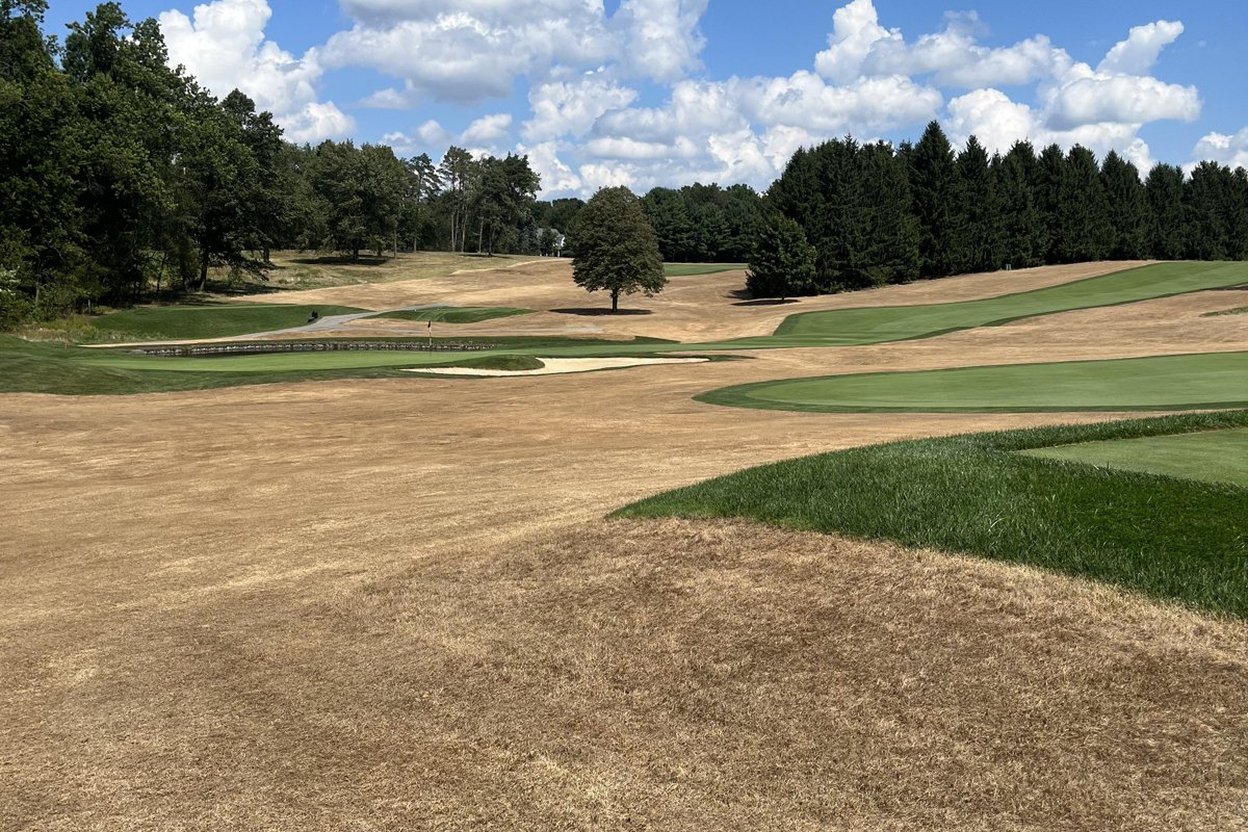
I spent more than 20 years as a golf course superintendent. Every summer we let the Kentucky bluegrass rough go dormant on purpose to save water. We didn't do that to the fairways or the greens, just the rough. And every summer golfers asked me some version of the same question: "What kind of superintendent would let so many acres of rough die?"
It wasn't dead, and it came back every time. That's the lesson for your lawn: brown isn't always dead. But dormancy has a time limit, usually somewhere around 4 to 6 weeks, and you need to be able to tell dormant grass from grass that's really gone.
A course has acres and acres of turf. Watering all of it through a hot, dry summer costs a lot of money and a lot of water. In a drought, the water may not even be available. When a large share of the country is in drought, water restrictions show up at golf courses too, and the USGA has long treated firm, dry and brown as acceptable playing conditions. Firm turf isn't a problem for golf. It's often better.
Letting the rough go dormant was a decision we made ahead of time, not a failure. The water went where it mattered most, on greens and fairways. The rough took care of itself.
Dormancy only works with a plan, though. Here are the parts that matter:
The USGA also warns that even courses that are normally wet can be seriously damaged by a few weeks of hot, dry weather. Dormancy is a tool, not a free pass, and that brings us to the clock.
Dormant grass lives on the moisture in its crowns, rhizomes and roots. Once those start to dry out, Ohio State says, you begin losing plants. Here are the usual time limits:
These are rules of thumb, not guarantees. Count from the point your lawn went fully brown, not from the last rain. A quick thunderstorm that barely wets the surface doesn't reset the clock much.
Your type of grass and your yard matter too. Kentucky bluegrass spreads by rhizomes, which is why it can fill in small dead spots after a drought. Minnesota says tall fescue and fine fescue can stay green for at least 28 days without water, so they often don't go dormant as fast in the first place.
The lawns most likely to have real losses are the ones with less to fall back on. After the 2012 drought, Iowa State saw severe turf loss on thatchy lawns and lawns on sandy soil that weren't watered. In my opinion, a lawn laid as sod in the last year or two belongs in that higher-risk group as well, because its roots haven't fully moved into your soil yet.
By now in October you've probably had some fall rain. Most dormant lawns have greened back up, and the spots that stayed brown are the ones in question. Here's how to check them.
1. Check the crown. This is the test I trust most. Pull up a few plants from the brown area and pick apart the base where the leaves meet the roots. Ohio State says healthy dormant crowns are white and succulent, and you may see new green growth. Dead crowns are brown and straw-like all the way through. Check several spots, not just one.
2. Look at the pattern. Dormant grass tends to brown evenly across the lawn. Dead grass usually shows up as scattered, sharp-edged patches inside turf that has recovered. Mostly green with a few stubborn brown patches in October usually means those patches are gone.
3. Do the tug test. Grab a tuft and pull. Grass that comes up with no resistance and has brittle brown roots is likely dead. This test isn't foolproof, because grubs eat roots and can make live grass pull up the same way. If the sod peels back like a carpet, look for C-shaped white grubs in the soil before you blame drought.
4. Water a patch and wait. If you still aren't sure, give the area real water. Purdue says to wet the top 2 to 4 inches of soil every 3 to 5 days. Dormant turf should green up within 10 to 14 days. If a spot hasn't greened in about 2 weeks, Purdue says it's probably dead and needs reseeding.
This is for next summer, or for this year if you're reading it during a late dry spell. Dormancy is one of the few times when doing less is the right call.
That leaves two good choices:
Now you know which spots made it. Here's what to do about the rest.
Small holes fill themselves in. Purdue says Kentucky bluegrass can recover from dead spots about the size of a softball. Ryegrass and tall fescue can fill holes about the size of a golf ball to a baseball. Anything bigger needs seed.
Feed thin turf, lightly and on time. Purdue's program for thin turf after a drought is 1.0 lb of nitrogen per 1,000 square feet in September and 1.25 lb as urea in early November. Iowa State's late-October to early-November fertilizer window agrees, so the feeding around Halloween is still ahead of you. Purdue cautions against piling on an extra early-October application, because it can encourage snow mold.
Be honest about seeding dates. Purdue's reseeding window for central Indiana runs from August 15 to September 15, a week earlier in the north and a week later in the south. Kentucky's guidance stretches to mid-October, but Kentucky is warmer than most of the area this site covers. If you're reading this in the northern states or the mountains, your window has probably closed. Seed planted now may sprout and then die over the winter. Call your state extension office for your local dates. Kentucky lists late February to mid-March as the next-best time, and for a lot of northern lawns, spring seeding is the realistic plan. When you do seed, Purdue's starter fertilizer rate is 0.5 to 0.75 lb of nitrogen and 1.0 to 1.5 lb of phosphate (P₂O₅) per 1,000 square feet.
For the dead patches, mark them now while you can see them. Rake out the dead material before the leaves come down, and get them ready to seed when the window opens. Next summer, when the lawn goes brown again, you'll know what you're looking at.
Fairway photo: USGA.
Tell dark-green overlap stripes from yellow burn stripes, fix each one, and calibrate your spreader and walking pattern so they don't come back.
Most lawns need two or three feedings a year, plus crabgrass prevention only if needed. A golf course superintendent's yearly schedule.
Skip the flyer: a screwdriver probe and thatch check show whether your lawn needs aeration, plus soil and traffic guidance on when to core aerate.